Last week, one of my friends exclaimed, “Okay, it was a boy! Who cares?”
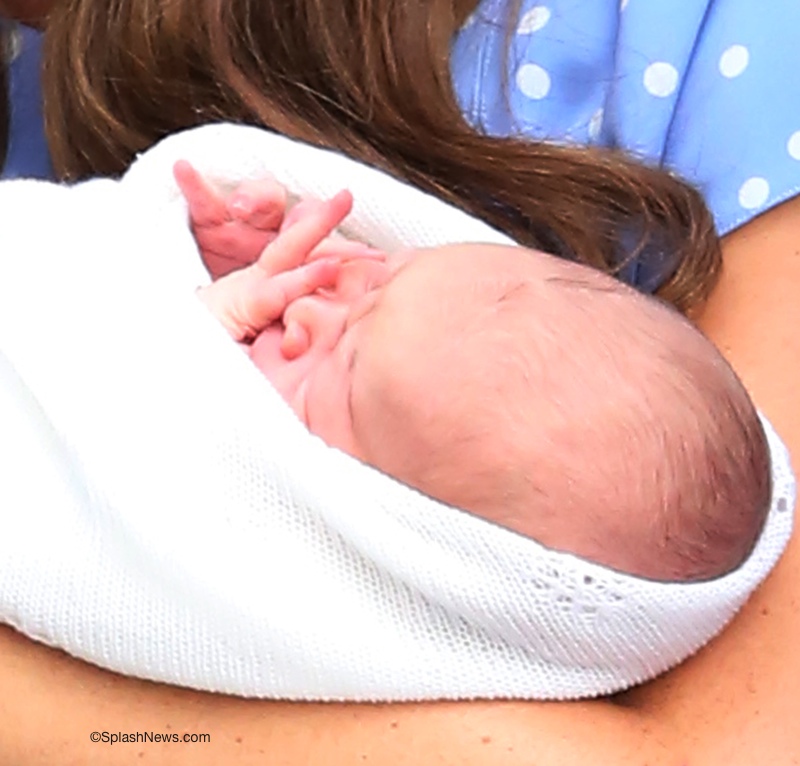 So the Windsor family in the UK had a new addition — but so did thousands of other families around the globe. Should this really rock the media world?
It’s a fair question.
If we’re talking about voyeuristic hoopla or hero-worship, you can count me out. However, as you might expect from someone who watched the royal wedding, I believe there are reasons to care. But it might not be the reasons you think.
First, it’s good to remember that at the heart of the hoopla is something God did.
He created a fresh new person. That this particular baby made such an abrupt journey from utter privacy to the gaze of the world only underlines the poignancy present at every birth: A sense of disproportion between the amount of bustle and the size of the guest of honor at this birth-day party. Deep joy. And a deep sense of mystery.
The drama of birth is a drama. Every. Single. Time.
It reminds me of G.K. Chesterton’s take on the (seemingly) mundane:
It is possible that God says every morning, “Do it again” to the sun; and every evening, “Do it again” to the moon. It may not be automatic necessity that makes all daisies alike; it may be that God makes every daisy separately, but has never got tired of making them.
I have marveled more than once at God’s great love for people, evidenced in the fact that He keeps on making them — one by one by one.
So there’s that: God created a wee Windsor, just because He wanted to. Remember! He did the same for you.
(And I wonder too what it shows of the rejoicing in heaven, each time a human, dearly loved and custom-created, is reborn. Surely no hoopla is too much for the angels in that joy).
But there’s more.
Wee George bears a plain and workmanlike name that’s already been marked up by history. Americans think of George III, a perfect example of the “divine right of kings” gone (disastrously) wrong. He treated brothers like slaves and lost the American colonies forever.
Meanwhile, Brits think of George VI, who lived the principle that to rule is to be a servant. A shy man yanked suddenly into the limelight, he watched the steamroller that was World War II come rolling inexorably towards him. He did what he could, visiting ordinary streets to cheer the ordinary folks, and it was enough to help his people survive the Battle of Britain.
What is royalty in the end, but a place where character can be on display — for good or for ill? For God’s glory, or for history’s shame. One has only to read the books of Kings and Chronicles in the Bible to see free will played out in father and son and grandson, one long roller-coaster of redemption, and sin, and redemption.
I pray for the royal family because they are real people, whom God loves. Because they are stuck in the limelight, whether they like it or not. (And isn’t the public a brutally fickle friend?) I pray because they have so much potential to illustrate godly character to a watching world.
You know what? There’s more. We forget, in our just condemnation of past abuse of power, that there is such a thing as covenant monarchy: king and subjects voluntarily bound together by their love of heaven’s King, all under the jurisdiction of heaven’s laws. This once was true in Israel and Judah. It’s what the Magna Carta was meant to bring.
Which might lead us to wonder: Is democracy truly the ideal government? Wise men crafted the United States as a democratic republic — one nation, under God — and under His law. Surely a nation unguarded by some sort of covenant has only the fickle justice to be found in the hearts of its leadership (whether that’s a monarch or a majority). Do we want to trade the divine right of kings for the divine right of the masses? It’s something to ponder.
But let’s move on, because there’s more.
I believe men show one facet of God’s character, women another, while every marriage has the potential to show still another side of His heart. So too the institution of monarchy paints a picture (however faint) of who He is.
Modern Western society makes much of the successes of everyman. That the way is open for whoever…that is a picture of God’s love. But it is not all.
Royalty shows another facet. A day-old child, who has done nothing, is intensely significant. Why? Because of whose child he is. That’s grace: not earned, but given. That’s identity: an irrevocable gift from one’s father. That’s destiny: it’s known from the beginning that he will have an impact on the world. That’s free will: what impact he has is left up to him.
Remember! God did the same for you.
Meanwhile, there’s more, of course — and this is the best of all. The aching beauty of the almost means there’s something real. There is a once-wee king, born to bring us pure joy. We yearn for the loving justice of His rule. Our hearts overflow, just describing His beauty. We’re homesick for His face.
I think our hearts are meant for monarchy — as long as that king is Jesus.


 Elisabeth Adams