Skip to content

Elisabeth Adams

  • About
  • Blog
  • Reading
  • Writing
  • Editing
  • Contact
    • Instagram
  • sweet

    Seen Sunday on the bus:

    One lady is fiddling with her cell phone, seemingly oblivious to the loud beeps it’s broadcasting into the ear of the woman sitting next to her. Swelling visibly with irritation, Lady 2 finally lets her have it. Can’t she tell how annoying the noise is?

    Lady 1 sticks up for herself, and then stands to leave the bus. It’s almost her stop.

    But at the door of the bus, she turns back, and returns to her seat: “I’m sorry,” she says. “And happy new year.”

    “Happy new year,” her former seatmate replies. And they part in peace.

    Everyone’s conscience, religious and secular alike, seems to be tender at this time of year. Why?

    On Monday, my morning soundtrack was punctuated with bus noises, birdsong, and the sweet voices of children sing-chanting their prayers. Schools across Israel resumed classes after the hofesh gadol: the “big break” of the summer. This was an unusually short break (since late June!) because the fall holidays are unusually early this year. There will be just time enough for the children to learn about the fall holidays, before they plunge into celebrating them!

    And there are plenty of holidays to celebrate. Next Wednesday night marks Rosh Hashana, the traditional Jewish new year. Ten days later is Yom Kippur — the Day of Atonement — the solemnest day of all, when the streets are filled with children, because traffic has come to a stop, and almost everyone fasts. The ten “days of awe” in between are a time to clear one’s accounts before God and man, a time to repent — which in Hebrew means “to return.” Four days after that is the harvest-feast of Tabernacles,  known in Hebrew as Sukkot.

    In English, we wish one another a “Happy new year!” In Hebrew, you’re wished a good or sweet year. That’s why the festive food of choice, come next Wednesday night, will be apples dipped in honey.

    So in this season we have fasting and feasting, awe and repentance and sweetness. Can we really mix all that?

    Yes, and more. We can add polio vaccinations for the children, country-wide, thanks to a new strain of polio that somehow arrived here from Pakistan. (No new cases; just carriers, thank the Lord). We can add to that yet another possible conflict in the region: days of trepidation, preparing emergency supplies (and filling my freezer with homemade waffles because it’s nourishing comfort food) while waiting and wondering. Was that a chemical attack in Syria? (Probably). Will the US step in, as they’ve promised? And if they do, will the Syrians retaliate on Israel, as they’ve promised?

    We have to wait and see.

    So in this season of awe and repentance and preparation and trepidation, is there such a thing as sweetness?

    The answer to that is YES.
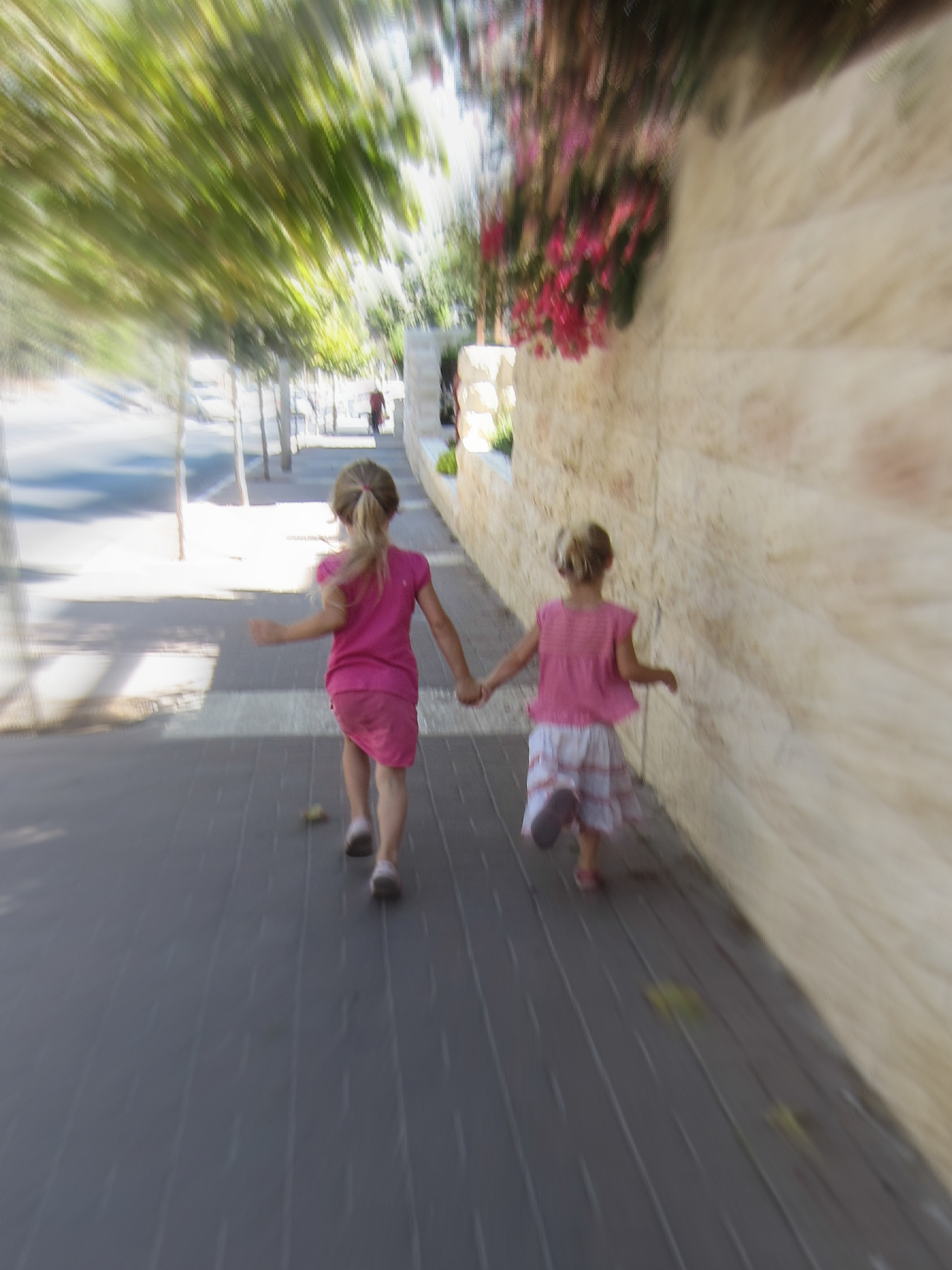
    runningRecently, someone told me of a book called Repentance, the Joy-filled Life. And you know, if God is our Father, then to repent is to return home to joy. And even fear and trepidation can be sweet, when it reminds us to run home pell-mell, and into His waiting arms.

    Recently, I read Isaiah 53 in Hebrew and was struck with the majesty of the language, the majesty of God’s intent for us, and the sheer dizzying height of His sacrificial love.

    Just one verse contains the gospel in a nutshell. As my mentor once told me, you can go in one end, and come out the other, saved!

    All we like sheep have gone astray,
    Each of us turned to his own way
    And the Lord has laid on him
    The iniquity of us all.

    It paints a picture of unruly, willful sheep, trampling on their own green pastures, knocking over the table spread for them in the wilderness, lost in the maze of their own foolish choices. And a shepherd who says, “No matter the cost, I want to find them!” And then He does.

    Oh yes, there’s sweetness. There’s a table in this wilderness. It’s the fact that we’re with Him.
    Elisabeth

    August 28, 2013
    Life in the Land
    No comments on sweet
  • royal

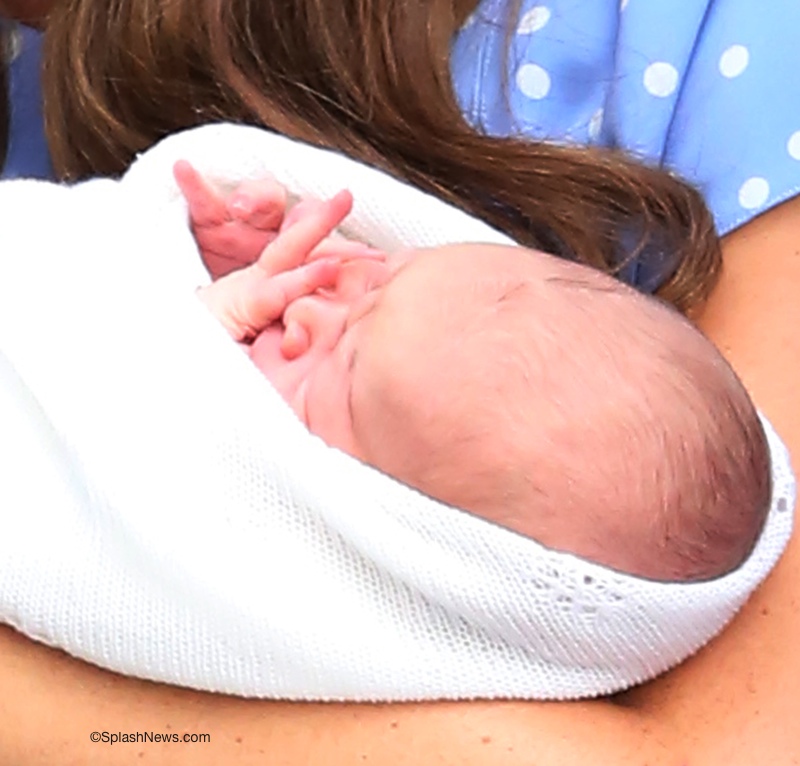
    Last week, one of my friends exclaimed, “Okay, it was a boy! Who cares?”

    Prince William and Catherine leave St Mary's Hospital, London, UKSo the Windsor family in the UK had a new addition — but so did thousands of other families around the globe. Should this really rock the media world?

    It’s a fair question.

    If we’re talking about voyeuristic hoopla or hero-worship, you can count me out. However, as you might expect from someone who watched the royal wedding, I believe there are reasons to care. But it might not be the reasons you think.

    First, it’s good to remember that at the heart of the hoopla is something God did.

    He created a fresh new person. That this particular baby made such an abrupt journey from utter privacy to the gaze of the world only underlines the poignancy present at every birth: A sense of disproportion between the amount of bustle and the size of the guest of honor at this birth-day party. Deep joy. And a deep sense of mystery.

    The drama of birth is a drama. Every. Single. Time.

    It reminds me of G.K. Chesterton’s take on the (seemingly) mundane:

    It is possible that God says every morning, “Do it again” to the sun; and every evening, “Do it again” to the moon. It may not be automatic necessity that makes all daisies alike; it may be that God makes every daisy separately, but has never got tired of making them.

    I have marveled more than once at God’s great love for people, evidenced in the fact that He keeps on making them — one by one by one.

    So there’s that: God created a wee Windsor, just because He wanted to. Remember! He did the same for you.

    (And I wonder too what it shows of the rejoicing in heaven, each time a human, dearly loved and custom-created, is reborn. Surely no hoopla is too much for the angels in that joy).

    But there’s more.

    Wee George bears a plain and workmanlike name that’s already been marked up by history. Americans think of George III,  a perfect example of the “divine right of kings” gone (disastrously) wrong. He treated brothers like slaves and lost the American colonies forever.

    Meanwhile, Brits think of George VI, who lived the principle that to rule is to be a servant. A shy man yanked suddenly into the limelight, he watched the steamroller that was World War II come rolling inexorably towards him. He did what he could, visiting ordinary streets to cheer the ordinary folks, and it was enough to help his people survive the Battle of Britain.

    What is royalty in the end, but a place where character can be on display — for good or for ill? For God’s glory, or for history’s shame. One has only to read the books of Kings and Chronicles in the Bible to see free will played out in father and son and grandson, one long roller-coaster of redemption, and sin, and redemption.

    I pray for the royal family because they are real people, whom God loves. Because they are stuck in the limelight, whether they like it or not. (And isn’t the public a brutally fickle friend?) I pray because they have so much potential to illustrate godly character to a watching world.

    You know what? There’s more. We forget, in our just condemnation of past abuse of power, that there is such a thing as covenant monarchy: king and subjects voluntarily bound together by their love of heaven’s King, all under the jurisdiction of heaven’s laws. This once was true in Israel and Judah. It’s what the Magna Carta was meant to bring.

    Which might lead us to wonder: Is democracy truly the ideal government? Wise men crafted the United States as a democratic republic — one nation, under God — and under His law. Surely a nation unguarded by some sort of covenant has only the fickle justice to be found in the hearts of its leadership (whether that’s a monarch or a majority). Do we want to trade the divine right of kings for the divine right of the masses? It’s something to ponder.

    But let’s move on, because there’s more.

    I believe men show one facet of God’s character, women another, while every marriage has the potential to show still another side of His heart. So too the institution of monarchy paints a picture (however faint) of who He is.

    Modern Western society makes much of the successes of everyman. That the way is open for whoever…that is a picture of God’s love. But it is not all.

    Royalty shows another facet. A day-old child, who has done nothing, is intensely significant. Why? Because of whose child he is. That’s grace: not earned, but given. That’s identity: an irrevocable gift from one’s father. That’s destiny: it’s known from the beginning that he will have an impact on the world. That’s free will: what impact he has is left up to him.

    Remember! God did the same for you.

    Meanwhile, there’s more, of course — and this is the best of all. The aching beauty of the almost means there’s something real. There is a once-wee king, born to bring us pure joy. We yearn for the loving justice of His rule. Our hearts overflow, just describing His beauty. We’re homesick for His face.

    I think our hearts are meant for monarchy — as long as that king is Jesus.

    Elisabeth

    July 29, 2013
    Writing Life
    4 comments on royal
  • welcomed

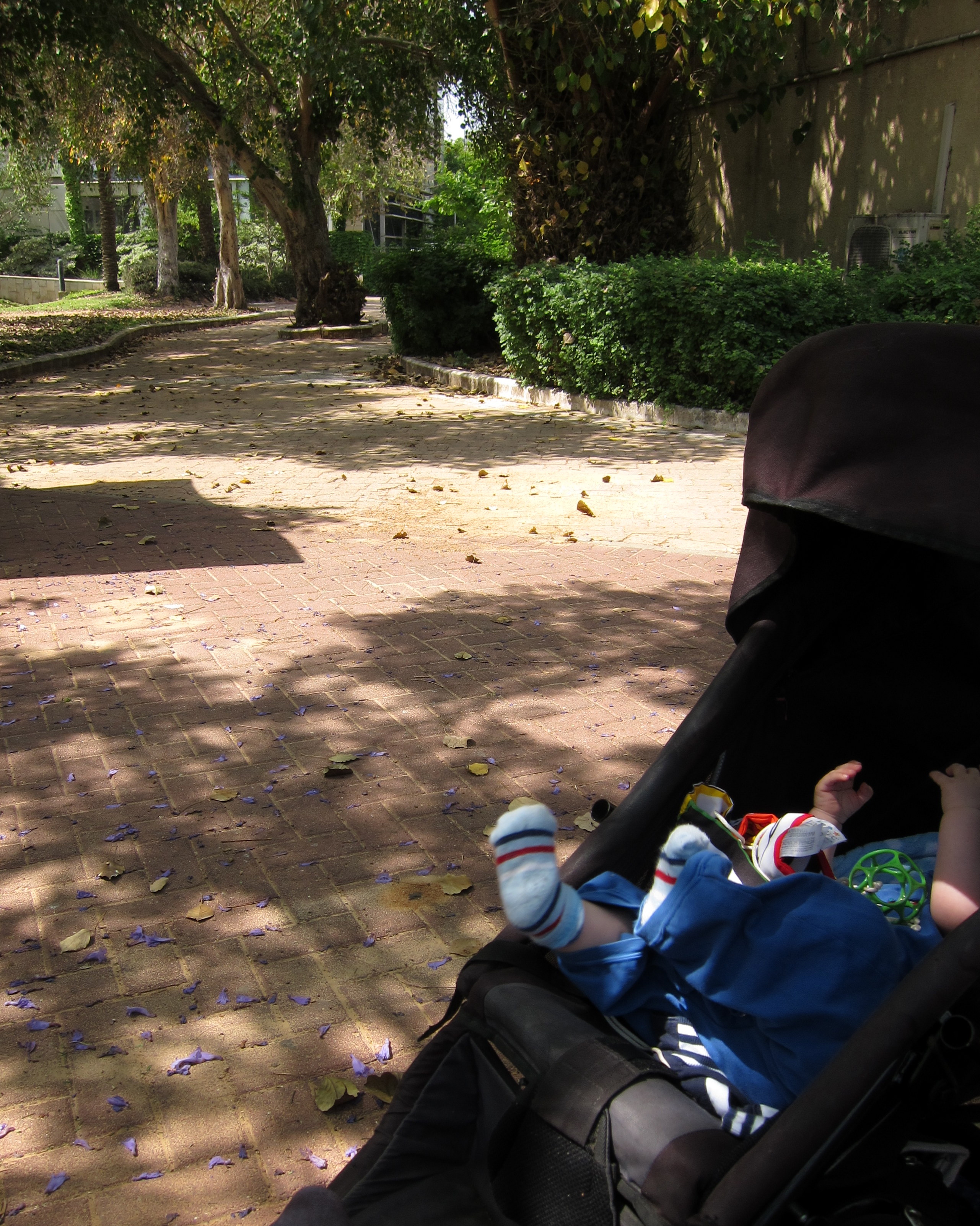
    IMG_3839Recently, I spent some time on an Israeli college campus with a very small friend while his mother was attending a few classes.

    As I strolled the wee chap around the gorgeous, park-like grounds, I counted at least five other babies (one of whom appeared to be in the care of his grandpa). Despite that fact that he wasn’t the only baby on campus, his big brown eyes and enormous smile made quite an impression on the ladies. A middle-aged woman stopped to squeeze his cheeks. A girl on a nearby park bench waved and smiled and cooed, apologizing for her interest, but “He’s so cute, I just can’t help it.”

    (And it wasn’t just the ladies: A soldier on the bus-ride home paused and produced a warm smile of his own, giving the wee chap a chance to grab the epaulet on his shoulder).

    Babies are in around here.

    This is a trait I noticed on the plane, before I even arrived in Israel the first time. I noticed several young Israeli couples traveling with their babies, and unlike some parents I’d observed in the US, they didn’t seem to feel the need to apologize for their children or make deprecating comments about how much work they were. Instead, they visibly enjoyed them. (Now, obviously small children are a lot of work. I’m just talking about the different cultural dynamics).

    Big families are most in among the religious here in Israel, but openness to children and a focus on family closeness is part of the broader culture as well. For example, on Saturdays, you can see whole families out strolling or enjoying the park together. Extended families tend to get together more often than is typical in the US as well.

    There also seems to be some sense of national family-ness. For instance, when school kids ride the public bus system, it’s assumed to that everyone will look out for them. Or when a young mom wrestles a stroller onto the bus, some stranger will probably lend a hand. Or if she needs to go up front to pay the bus driver, she might ask if you can hold her baby for a moment. (This has happened to me more than once).

    Now, I love this about the Israeli culture.  And I’ve read some really eloquent appeals to Christians to form families and welcome babies into them. To these I say a hearty amen!

    But before we can progress to discussing how to form a family, and how many babies to welcome, I think we have one foundational truth to ponder in our hearts – and it’s a simple one that any of us, regardless of parental status, can find fruitful in their lives.

    It’s what Jesus said:

    Whoever receives one such child in my name receives me.

    untitledIt sounds like we start, not with children in the generic, or hypothetical children of our own, but with one child. A real one.

    Welcome that one. Love that one.

    And let me just say, as the older sister of seven siblings (half of whom I can remember from their babyhood), and the friend of some very precious small people, the investment is nothing compared to the returns: Unconditional, exuberant love. A lot of laughter. (And yes, some character-building moments, but perhaps not as many as you might think).

    It’s humbling, what Jesus says: What you do to them, you do to Him, to our precious Redeemer. I know I have been humbled, as I’ve babysat, and as I’ve provided respite care for the handicapped and the elderly: the small in the world’s eyes; the great in His kingdom.

    If you’re intimidated, you don’t need to be. They’re people. Extraordinarily small ones, yes, but not a separate species you must study in order to understand. They’re like you: they love and long for love; they like and dislike things unique to them.

    Feel free to quote this back to me, as I simultaneously love my young students, and fear the chaos they could make of our classroom.

    Once, I was that bored student, the stubborn one, and the one so shy it hurt. That I love adventure now, that I accept new experiences, and enjoy making new friends: this is sheer grace, the fruit of God’s love invested by others in me.

    Someone (many someones!) welcomed me.

    God can help me do the same.

    PS Remember how I was praying for the impossible? Well, last week was a week of “impossible” answers for two of my friends! One a relationship that suddenly burst into bloom, and the other an adoption opportunity that appeared out of nowhere. There are no words for how BIG and how KIND our God is.

    Elisabeth

    July 8, 2013
    Life in the Land
    1 comment on welcomed
  • Praying for the Impossible

    Prayer has been on my mind a lot this week.

    There was the young-mom friend who called on Sunday to pray with me over the phone. She was facing a move, had four littles underfoot — and what did she focus on? My future marriage.

    Then there was the elderly lady on the street. I carried her bag a few feet down the sidewalk; she blessed me soundly in Hebrew.

    “Are you married?” she asked.

    “Not yet,” I said.

    “May God send you a good man!” she exclaimed.

    (Spontaneous blessings from strangers: just another of the reasons I love this city).

    But by Thursday night, I needed every ounce of those blessings to combat dis-courage and frustration. Relationships are confusing. A desire to understand is not always enough. So how can I expect to make it as far as marriage?

    Then there’s this week’s news: War is pending on our borders.

    Well, okay. War is always pending here, it seems. It’s like living in hurricane country, or in Tornado Alley. You buy a house with a good foundation. You dig a storm cellar. You stock up on water and canned goods. You pray. And you keep right on living a happy life.

    But there’s bad news from America too: marriage took a hit in the Supreme Court yesterday. Well, I care about marriage, because it’s a picture of who God is to us. And oh, I love my country. But sometimes the weight of the need in the world is like a mountain on my chest. And I just feel trapped.

    mountain 078Didn’t God say that things will get worse before the end?  Yes, He did. But does that mean there’s a time to simply —

    Give up. Accept the bad news. Live a simple godly life in my corner of the world?

    What?

    When there’s not a single soul God wants to perish in this world? When He’s still pouring out His goodness, longing to see repentance, grieving over “respectable” and “shocking” sins alike?

    When it’s those very mountains our faith is designed to move?

    When it’s in impossibilities that He gets the most glory?

    I’m sure it’s not a mistake that this article was republished today. I know God wanted to refresh my faith. I don’t know about you, but I want to keep asking. Even if my voice and heart are faint, I’m pretty sure He hears.

    Elisabeth

    June 28, 2013
    Boundless
    No comments on Praying for the Impossible
  • Odd Man Out

    Since God often turns the topics I write about into personal life-lessons, it probably wasn’t a good idea to write about the gift of desperation.

    Unless, of course, I wanted to learn more about how Jesus steps in, each time I’m sure I can’t finish something. And that’s exactly what happened while I was writing this article.

    Again and again.

    Sometimes He bailed me out with a brand new thought. Or a fresh surge of faith. But more often, it was timely input from others: wisdom, willingness to share inner struggles, or both!

    It all started with a question:

    When you’re the only single — for example, all your siblings or co-workers or everyone in your small group is married—how can a young adult handle these situations? What opportunities are there?

    First, I turned to other singles for help….and then to married people, for their perspective. By the time I was done, at least forty people on three continents had contributed their thoughts. Many of them poured out their hearts, writing a whole letter about how they feel and what God has been teaching them.

    I wish you could read it all — all forty-something pages! Because I think you’d feel as rich and as encouraged as I am to know: we are not alone!

    We have more in common than we have to separate us.

    Don’t get me wrong: the loneliness is real.

    But in lonely seasons, I’ve prayed for friends – and God has answered. Several of the women He sent are young moms, and I’m humbled to tell you that they pursued me. I can’t tell you how many times they have spontaneously broken into prayer for a family in my future.  Or how much joy I get from investing in their lives.

    IMG_8837a

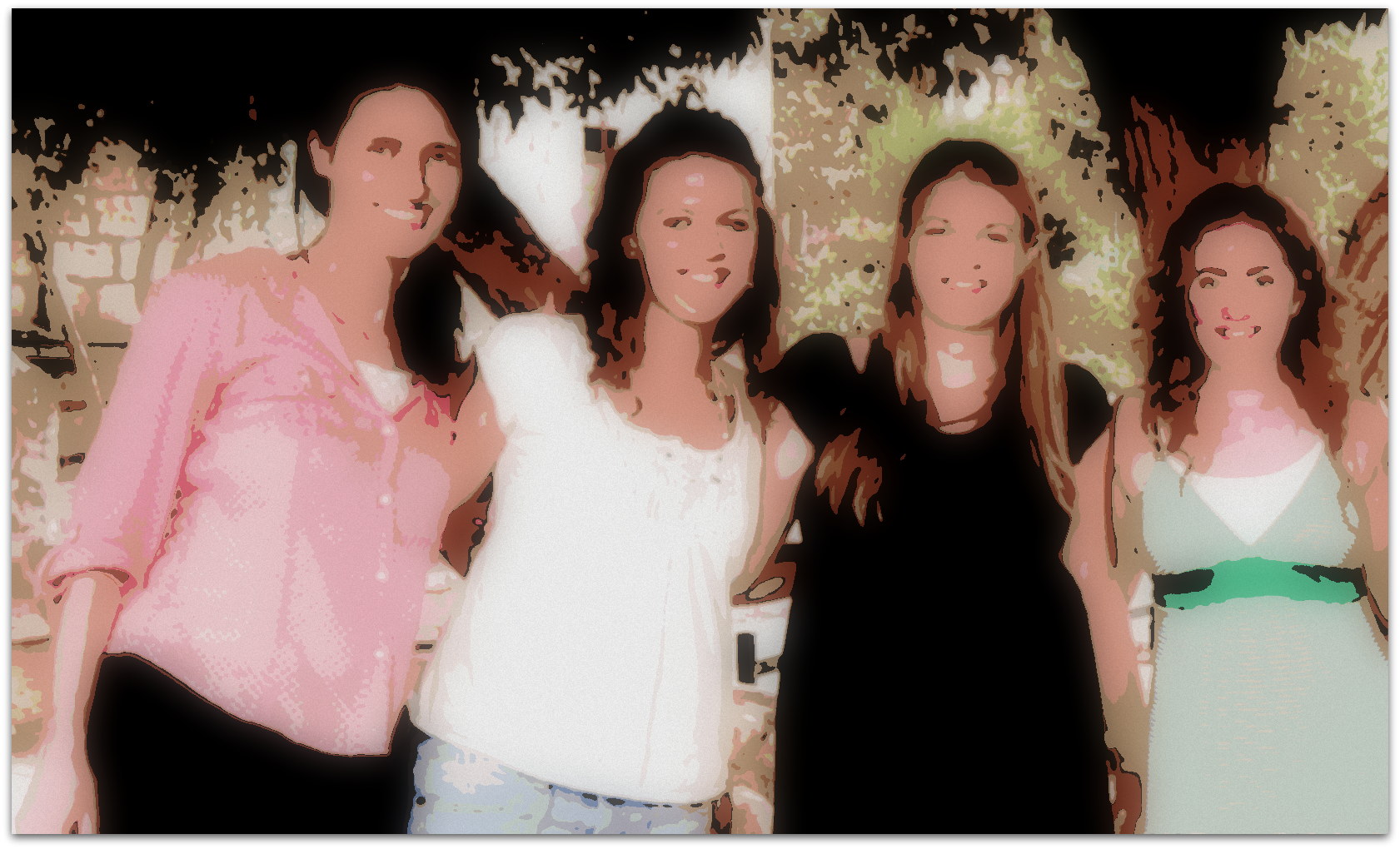
    Recently, I was the only single girl in a group of young mothers. Instead of the usual glitz and gifts of a baby shower, we were a small group in a low-lit living room, there to pray for Bethany before the birth of her third child.

    As I listened to tale after tale of labor and delivery, one woman’s comment implied that motherhood is the rite of passage, that it’s Main Street to maturity. And I felt –

    Awe.

    Awe at God’s masterful design for turning girls into deep and unselfish women. I understood their labor pains, because He is deepening me. I too have known times of wrenching pain, of no-way-out-but-through, of utter dependence on Him.

    Yes, singleness can be a lot like grief. I can’t always predict what will trigger the sadness next. But I can choose my response, separating the pain of my situation from the intent of my friends. I can extend the grace and understanding I want so desperately to receive. I can acknowledge their existence and become aware of their struggles because that’s what Jesus does for me.

    Elisabeth

    May 27, 2013
    Boundless
    4 comments on Odd Man Out
  • History

    Last Sunday night, I was on the phone with a friend in New York City. She was retelling the evident work of God in her tiny corner of the city: increased prayer, changed hearts, and other miracles — a litany of sheer joy — when Israel’s Memorial Day began. Two minutes is a long time to listen to an air-raid siren: an eerie sound that makes earthquakes in some hollow place inside me.

    In a Massachusetts-sized nation, everybody knows somebody who died — in war or terror. Maybe that’s why there are no picnics here, though America’s Memorial Day means flags and bands and barbeques.

    Those came on Monday night, when Israel’s birthday began. (This nation keeps holidays from sunset to sunset). After hot dogs and popcorn and brownies, we began telling — as we often seem to do in Jerusalem — of the latest in God’s story. So I repeated the news from my friend in New York, we prayed, and as a further prayer, we sang. We all — Americans, Canadians, and one lone Finn — sang “God Bless America.”

    We saw fireworks as we drove home — and within the hour, there were fireworks of a different kind in Boston. Three friends of mine were in, or were watching the race. Three loved ones live and work in the city. All safe.

    Tuesday was so surreal. Happy 65th, Israel! Oh, Lord: Boston. The scenes on the news: so familiar from Israel’s recent past — but not in Israel at all.

    I heard specks of God’s story: The folks who ran into danger to help. The disaster-response training at a local hospital, given just two years before — under the expert tutelage of the Israelis. Even the New York Yankees breaking their hundred-year feud with the Boston Red Sox with class and kindness.

    Friday came, and my housemates had the live news on for much of the day, as police hunted down the — well, what is he? A monster? A skinny teenaged boy? I hid in the kitchen making challah and prayed. But only in short bursts. “Pray for those who despitefully use you” ran through my head. (Thank you, wise friend who reminded me). And Oh Lord: Boston.

    I went to bed with the outcome still in doubt. And rose to check the news and breathe a sigh of relief. Here, people fight violence by going back to normal, just as soon as they possibly can. In America, the end of the siege meant cheering and singing the national anthem. I watched a clip of that scene, and instinctively leaned away from the computer screen: there was just too much and too many emotions.

    Now an Israeli doctor in Boston tends the wounds of the suspect, just as they do here: side-by-side with the victims. “We have heard that the kings of Israel are merciful kings.”

    In this cacophony of puzzlements, I don’t know very much — but I do know this:

    This world is broken,

    but

    Jesus is here.

    We are in this together.

    And there’s much more to His story.

    Elisabeth

    April 21, 2013
    Life in the Land
    1 comment on History
  • How to Fight Well

    kate n lissI’m not sure what I did for the twenty months before my sister Kate was born, or what I would have done if she’d never showed up on the scene.

    I do know that without her, I’d be more selfish, more boring, less well-read, and much worse at managing conflict. (Shhh…Don’t tell her this, but I’d also have spent much more time getting lost).

    We’ve shared our first year at university, living in an enormous empty house in Jerusalem. We’ve shared the same job: shuttling back and forth from caring for a 97-year-old gem of a lady, rarely seeing one another and staying connected (laughing, venting, crying together) over the phone.  We know by experience that two are better than one: we seemed never to crash at the same time. One of us was always okay enough to pick up the other when she was down.

    With a sister (especially a sister who turns into a traveling buddy), you have to get along.  With a sister (especially a sister who’s also a treasured friend), there’s too much invested to bail out now.

    The commitment was an enormous gift: it gave us a safe place in which to fight comfortably and learn to fight well.

    Elisabeth

    April 15, 2013
    Boundless
    No comments on How to Fight Well
  • Nu?

    Okay, I’m greedy. There are thousands of shades of meaning in the words-rich English language, yet one of my favorite parts of encountering other cultures is the supply of more unique words.  Like this Yiddish word:  Nu? (Or more properly, Nuuuuu?) It’s such a toe-tapping, personality-oozing reminder that Yes, I am waiting for an answer. So go on: explain, already. Tell me more!

    So now I’ve brought it up, and left you hanging:

    What is it really like in Israel?

    I could probably spend years in the telling. (And in a way, I already have, anytime I’ve tagged a blog post with “Life in the Land.”) But that’s not the only question I’m answering when I write.  I’m also answering, “What is it really like to know Jesus? (Here or anywhere in the wide and fascinating world).  What a delightful impossibility this answer is — and well worth chasing after, even though I’ll never, ever be able to tell it all.

    I’m between Easters here (there’s another one coming in May), so pardon me if I’m not done yet with the Resurrection. Here’s what it means, here in the Land:

    It means lots of layers and lots of choices in the days leading up to Resurrection Day. Shall I attend a Jewish Seder? (Yes.) How about one focused on singing, hosted by world-traveling musicians? (Why, yes!) And one that remembers Jesus’ Last Supper, on Holy Thursday itself. (Yes again!) And I wonder: When Jesus said “Do this in remembrance of me,” could He have meant the entire meal? At least for sometimes?

    Perhaps.

    It means a yeast-less week. Before there was Lent, there was Passover, with the bread of affliction: flat, dry, pierced, and striped. A meal by meal reminder that redemption is costly — and that it came!

    It means my every-year longing to walk to Emmaus has revived again. Imagine hiking, while your heart is burning within you that “Hey! Jesus is here!” Oh yes, He is here every day, but sometimes a person wants to go on pilgrimage. Pilgrimage is awfully practical: packing up a bag, putting on some shoes…and studying out which of the candidates might be the right Emmaus, anyway. It also means a little more healing for that twisted ankle. Maybe next Easter? (Now less than a month away).

    On the night before Easter, it means that the time-lag between home and here (which keeps me waiting half of every day for family to wake, and puts me to sleep halfway through their day) turns a simple afternoon call from the States into a wee-hours’ blessing: somehow,  I am awake, and the first sibling to hear my sister say, “I’m engaged!”

    After a few hours of sleep, it meant grey light, birds singing outside my window, a groggy head, and yet a joy-piled-on-joy kind of morning. Next came a bus to the Old City, and sunshine slanting through Jaffa Gate onto polished stone. I walked past shuttered shops to the quietly-waking Church of the Holy Sepulcher. I went down and down stairs to the lowest chapel, where the ceiling shows the marks of the quarry there in Jesus’ time. And sang! Shyly, I sang “Up from the Grave He Arose!”

    I wandered quietly. Up the stone stairs, worn curved by thousands of feet, to the top of Calvary, where I saw a few Jewish tourists and Christians pilgrims. Up in the sunshine on the roof, where I munched some matza and an Ethiopian monk smiled at me. Back down at the entrance, sitting on the bench by the ponderous wooden door, I met an elderly lady who trotted me into the heart of the church to show me “the tombs of the two thieves.” (They are, at least, from the right time in history). The room we entered to reach those tombs? Is usually dirty and bare. Today it had undergone a mini-resurrection of its own, and was decked with bright wall hangings and rugs, and filled with worshipers.

    As the whole church soon would be — to the bursting. I left while the large square outside was still quiet; while TV cameras were still being set up. Really, at just the right time.

    Back in the narrow streets, more shops had been unshuttered; a few more pilgrims were about. I was stopped in my tracks by two young uniformed men. “Can you explain to her in English what’s going on?” one said to the other (in Hebrew). He couldn’t, but I got the gist: You can continue in a few minutes, but right now something’s coming. Soon a whole cluster of folks had been dammed up there in the street: curious, standing on tiptoes, passing the explanation around.

    Down from Jaffa Gate (and yes, I mean literally down, because Jerusalem is nothing but hills, even inside the walls) came a band with drums, and drums, and more drums. Catholic boy and girl scouts in an Easter parade. Beside me, a religious Jewish father told his children, “Look away. Don’t watch.” And it broke my heart, for so many reasons.

    Do I understand what it’s like for the Jewish people, to know that the Easter season once meant preaching, and even pogroms against them? No. No, I don’t. But it grieves and humbles me.

    Do they know that Jesus said “No!” when a disciple took up the sword in his name? That he willingly went to the cross? Do they know that He said (for all of us), “Father, forgive them. They don’t know what they do!”

    I could criticize those who called themselves Christians in the past, for exhibiting everything but the truth about the one they professed to follow. But do people (any people) see God as He is — in me? Can they see — through me — that when they hurt, He hurts too?

    A few nights ago, I was praying one of those fist-pounding prayers that are born out of personal pain. The ones that say:

    Lord! Do something! (I know I am so small, and You are so great, but…) Please, please move. For me! (And oh yes: for others too).

    David Wells speaks of prayer as rebellion against the status quo: to be so convinced that God is able and willing to do good in the world that we humbly demand, “Your kingdom come! Your will be done on earth as it is in heaven!”

    As I prayed, I imagined the will of God as a stake being driven into the ground, one whack of faith at a time: Bang! Bang! Bang! And then I realized I was actually seeing the nail being driven into Jesus’ hand. He had such unselfish, no-holds-barred determination to bring the will of His Father into the earth that He offered His own wrist and said: “Drive it in here.”

    His willing suffering made an entry point for the Kingdom of God. (Perhaps ours does too). But one thing I know: He cares. Oh, how He cares! The crucifixion makes that clear.

    And the Resurrection? Says He’s abundantly, unstoppably able to act on that love.

    Reversing death to life?!

    Yes. Anywhere in the whole wide world.

    This slideshow requires JavaScript.

    Elisabeth

    April 12, 2013
    Life in the Land, Writing Life
    1 comment on Nu?
  • everything

    You know the kind of news that changes everything?

    An engagement, for instance. Your mind races backwards and forwards, and you see the past and the future in a whole new light. Wow, you think,  He already loved her then? And That will mean, what, a fall wedding? I’d better start looking at plane tickets. Joy starts exploding inside you, and you can’t stop grinning. You try their names together in your mind, and smile some more.

    Or perhaps it’s a death. In that case, previously insignificant events become weighty. Precious. Or excruciatingly painful. A whole imagined future suddenly vanishes in a moment, like an amputated limb, leaving phantom pains behind.

    Now imagine the one weekend in which Jesus died. Lay in the grave for three long days. And just when (perhaps) His disciples were saying to themselves, “He’s dead” — and were just beginning to believe it —

    Someone saw this…

    IMG_0076

    and then this…

    IMG_0081

    And then —

    Then they began saying to themselves (tentatively? tearfully? triumphantly?) He’s — ALIVE!

    That was news that changed everything.

    Elisabeth

    March 31, 2013
    Life in the Land
    No comments on everything
  • Passover

    IMG_3348Once upon a time, when I was a brand new student in Israel, I had a wee landlady with a really-truly heart of gold. Considering the natural order of business relationships, she should be just a distant memory by now…

    Not, for instance, a main character in my article about hospitality, because she took me into her home for six weeks. Not the one whose Passover traditions are imprinted into my holiday memory as “the way it’s done,” whose home I miss whenever the Seder meal rolls around again. And certainly not popping up in my email inbox.

    But she is, and she did:

    It is almost Pesach. Where are you??? Are you joining us this year?

    So tonight I shut down this week’s furious writing project, got dressed up, crossed town, and sat down at the table with one grandma, two grown granddaughters, three wee cousins and their parents, plus my fellow adoptees, two Canadians and two Finns.

    Together we produced one Exodus-story skit, watched the tiniest one practice her walking, noshed on bitter herbs (parsley, lettuce, and horseradish), broke and dipped unleavened bread, sipped on wine or grape juice, told tales, pondered our own bondage and freedom, listened to interpretations from the teen and the second-grader, prayed and sang and recited in overlapping Hebrew and English.

    Then came a lull: dinnertime itself, when we stuffed ourselves on turkey and gefilte fish, matzo ball soup and brownies and sorbet, hid and found the afikomen. We sang timeless Psalms. We sang rollicking “The House that Jack Built” kind of songs, which build the story as you go along.

    It was fluid and organic:

    “How about we skip this part, Mom?”

    “I know the tune to this one. Do you?”

    In the background, the mama rocked her children.  When the leader stopped to hush his baby, the grown-up girls kept the songs going

    At last (five hours in, but who was counting?) we reached the end of the order of service.

    As we cleared the table, two small boys slept on the couch: one propped in the corner and sitting straight up. The Finns had to leave: no vacation-time for them tomorrow morning. The Canadians said goodbye. The cats reappeared from their exile outside, and found fish broth in their bowl, their part of the festivities. I shook the tablecloth free of lettuce bits and matza crumbs, shared hugs, and headed home in the cool night air.

    That, my friends, is what it’s like to attend a Seder in Israel. This family’s Seder, anyway.

    If you’re curious about the Seder meal and its links to the Last Supper, then have a look here.

    Elisabeth

    March 25, 2013
    Life in the Land
    No comments on Passover
Previous Page
1 … 3 4 5 6 7 … 16
Next Page

Get my posts in your inbox.

© 2023 Elisabeth Adams · All Rights Reserved

Create a website or blog at WordPress.com


Loading Comments...
 

    • Subscribe Subscribed
      • Elisabeth Adams
      • Join 84 other subscribers
      • Already have a WordPress.com account? Log in now.
      • Elisabeth Adams
      • Subscribe Subscribed
      • Sign up
      • Log in
      • Report this content
      • View site in Reader
      • Manage subscriptions
      • Collapse this bar