Skip to content

Elisabeth Adams

  • About
  • Blog
  • Reading
  • Writing
  • Editing
  • Contact
    • Instagram
  • longing

    Passover arrived on Monday night at sundown.
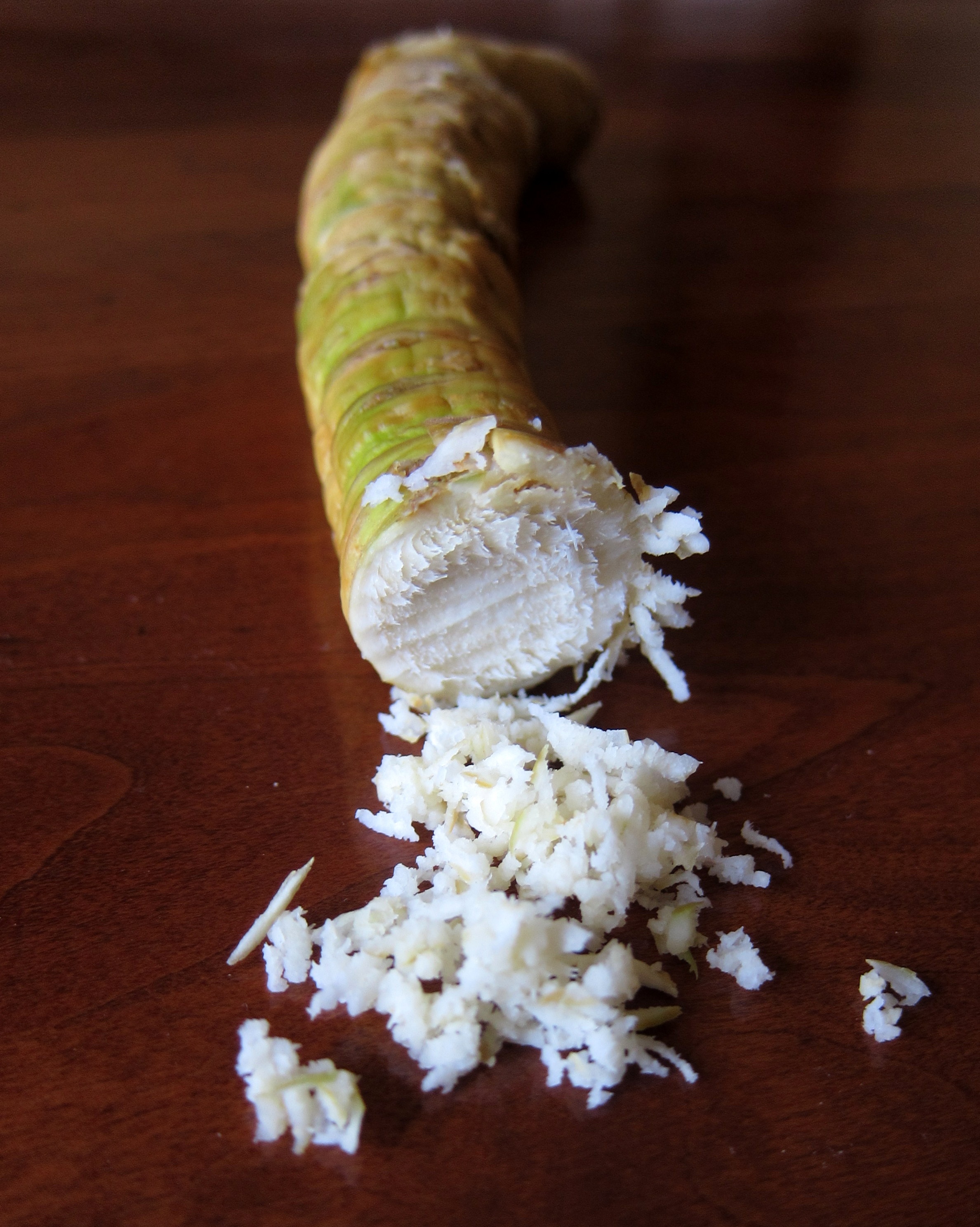
    IMG_0201I arrived at my hostess’s home several hours earlier, just as she was in a nearby park, burning leavened items from her home. Just in time, too for an afternoon of cooking: three generations compounding matzo ball soup and tzimmes (the Jewish answer to sweet potato casserole), steaming green beans, roasting salmon and turkey breast, washing romaine lettuce and parsley sprigs, grating horseradish (which can be even more tear-inducing than onions), boiling eggs, mixing salt water and running last-minute to buy gefilte fish, setting the long table and arranging the Seder plate.

    This flurry of preparations was followed by an extended-family meal, much like our Thanksgiving — at least for the groaningness of the table and the fulness of our stomachs. The meal was also accompanied by a skit retelling the Exodus story, questions and answers about its meaning to us, reading from the ancient commentary called the Haggada, chanting Psalms 113-118, and singing some rollicking songs. All this took about four and a half hours!

    I watched young parents taking pains to teach the Bible story, and a grandmother provoking deeper thinking among the adults. A boy about eight years old held his own in the discussion about what might constitute slavery in our own lives…and his two-year-old sister piped out the words to the question-song: “Why is this night different from all other nights?”

    IMG_0188On Tuesday night, I attended a second Seder meal, this one larger, and a little more offbeat, as far as traditions go. Imagine a table, gorgeously set for twenty-six people. We had live music: accordion and guitar and violin, and  a song for every significant part of the meal, tying the Exodus story to Jesus’ redemption — culminating in singing along to the old hymns. There was just one child at the meal, a curly-headed four-year-old, and she was just right for sparking some joyful folk-dancing.

    I’ve been pondering what I’ve gotten so far from this Passover, and I’d say it’s this: longing. The older I get, the more brokenness and injustice I encounter. And yet I continue to find bad news surprising, as if I was designed for a world full of justice and redemption — which I firmly believe I was.

    Did you know that less than 100 miles north from where I sit, an unspeakably brutal civil war has been raging for several years? I don’t know what the word is for a government that seeks to annihilate its own people. Shall I call it genocide?

    That would be tragedy enough, but there’s more in our very own hearts.

    Consider the behavior of the Israelites, barely out of their slavery in Egypt — and already longing for cucumbers and melons, as if they’d just exited a resort, instead of a genocidal society that chucked their baby boys in the river Nile and chained their adults (men and women, old and young) to a treadmill existence. Do you suppose they had a sort of collective Stockholm syndrome, in which the captors became the beloved, and living death was preferable to liberty? It seems ludicrous from where we stand, but how often do we embrace the things that hold us captive too?

    So this Passover prompts me to longing. There’s so much redemption needed in the world, and I find myself asking, “O Lord, how long?”

    But if He sets me to the task of longing, I know (knowing Him) that I won’t have too long to long for what He’s already promised to bring:

    Redemption!

    It’s real, friends.

    It’s already here — and there’s so much more to come. That’s why there’s another thing that Passover has set me to do – and that’s telling.

    Telling and singing and living the tidal wave of love that’s found in our Redeemer.

    For this reason I bow my knees before the Father, from whom every family in heaven and on earth is named, that according to the riches of his glory he may grant you to be strengthened with power through his Spirit in your inner being, so that Christ may dwell in your hearts through faith—that you, being rooted and grounded in love, may have strength to comprehend with all the saints what is the breadth and length and height and depth,and to know the love of Christ that surpasses knowledge, that you may be filled with all the fullness of God. (Ephesians 3:14-19)

    Elisabeth

    April 18, 2014
    Life in the Land
    1 comment on longing
  • spring

    Other than the three-day snowstorm in December, and the week of spring rain in March, I think we have to call this the winter that wasn’t. But for those of you who endured unusually cold weather in the American South, or fantastical freezing rain sculptures in the North…or whatever your winter was like, I hope these photos will provide a breath of hope that there really is such a thing as spring, and it’s headed your way soon.

    This slideshow requires JavaScript.

    Elisabeth

    April 7, 2014
    Life in the Land
    No comments on spring
  • PS

    If you read my previous post, and missed the deadline to order my photo book for (almost!) free, it’s just been extended to the end of today (PDT).


    Elisabeth

    March 26, 2014
    Life in the Land, Writing Life
    No comments on PS
  • kaleidoscope

    I now interrupt our regularly scheduled…well, radio silence, actually, to bring you an update and a small gift.

    In the last couple months, I’ve experience an upsurge in freelance work, which is a blessing that occasionally made me feel like Rapunzel locked up in her tower. However, I’m pretty sure that Rapunzel didn’t get to “hang out” with the Essenes, while editing a dissertation on their love for biblical interpretation that focuses on the heart, or spend time with some extraordinary writers and composers while researching the background to their 25 hymns.  Nor did she get to immerse herself in the cultural-historical backgrounds of the Bible, while researching for someone else’s Sunday school curriculum.

    I’ve also taught a challah-baking class,  read some excellent books, corrected reams of English homework, completed an article, eaten the best Turkish delight ever, planted a tree, seen Galilee in the spring for the first time, (exquisite!), and thanked God for a week’s worth of much-needed rain, at the end of the winter that wasn’t.

    I also created a photo book about this place I love. Originally a gift for a friend, I can think of all sorts of folks I wish I could hand a copy to. And now, in a way, I can hand a copy to you. Until midnight PST on March 25, you can use the coupon code STORYTIME to knock all but $2.40 and the shipping costs off the price.

    Did you ever play with a kaleidoscope as a child? It’s a toy-sized telescope that gives you just a tiny, colorful glimpse of what’s inside. That’s how I think of this wee book.


    cover

    Elisabeth

    March 24, 2014
    Life in the Land, Writing Life
    1 comment on kaleidoscope
  • Not Your Sister

    Who remembers the children’s book in which a baby bird is born, hops out of the nest, and immediately begins searching? He asks a cat, a hen, a dog, a cow…He even asks a power shovel: “Are you my mother?”

    Silly stuff, I know.

    But honestly, it’s confusing to be single, and supposedly surrounded by siblings in Christ. If I were to wander around asking, “Are you my brother?” — who would answer “Yes”?

    Who would I want to answer “Yes”?

    And if he did, would I know how to treat him?

    Someone once asked Jesus, “Who is my neighbor?” Who is this person I’m supposed to love as myself? Jesus’ topsy-turvy answer came wrapped in the parable of the Good Samaritan: He’s someone in my orbit, someone in need, someone I’m tempted to ignore.

    I think my answer to “Are you my brother?” may also be unexpected.
    082

    Because overwhelmingly, being siblings in Christ is not about what we can’t do, but about all the things we share, together.

    “Not Your Sister” is about community, and it grew out of community: a reader’s question about “What’s a Guy to Do?”, a blog post by a friend, my course work over at the Story Cartel, conversations online, in the car, and while out on a walk, a frank beta reader or two, and a couple of life-saving editor friends.

    Thanks to Aaron for this key line:

    Note that [Paul] doesn’t say, “Don’t relate to [sisters in Christ] at all.” Rather, he advises on how to relate to them properly.

    In all purity. And in love: love that looks like Jesus.

    We could discuss the details for a while. For instance, my friend Sarah realized that she automatically thinks of every person of the opposite sex as off-limits. If they are married, like her husband’s coworker, “He isn’t just Trey. He is Trey and Laura.” Another friend is not married. She sees him as “Scotty who will one day be married to so-and-so.”

    I could say, Women, be wise about chatting online! The lack of context heightens the risk of someone getting hurt. It’s not like church, where he can see you greeting everyone else, for just as long.

    I could also say, Men, it’s more hurtful to refuse to acknowledge a girl’s existence than it is to gently refuse to fuel her crush. If you say “Hi, how’s school going?” — and she takes it wrong, then chances are it’s not your fault. We’re all responsible for our own imaginations.

    That’s just the beginning of the conversation. Perhaps you have something you’d like to add?

    But in short, do justice. Love kindness. And walk humbly with God.

    Only He knows your heart, and the heart of each person with whom you interact.

    Elisabeth

    January 13, 2014
    Boundless
    No comments on Not Your Sister
  • Amen

    Just weeks ago, I was sitting in a vespers service in the US. Candlelight, carols, readings: the usual. And when the pastor gave his ordinary admonition to “go to Bethlehem,” I doubt he knew he had a listener who could take him literally.

    But I could! And I did. I went to shepherds’ fields, and saw what could have been a shepherd’s cave.  It was stark and bare and still: an easy place to sing “O Little Town of Bethlehem.”

    IMG_7571I spent Christmas week in the company of a first-time guest to Israel, poking into all the Biblical corners of Jerusalem. Could you sing carols, eat felafel, pass beggars and snow-felled trees, wade through water in a tunnel delved in Old Testament times to meet the Pool of Siloam, explore the drains of the New Testament city, only to climb steps that led Jesus into the Temple, view scrolls that were already centuries old when he was on earth, visit the spots where he was born, healed the blind and lame, prayed his last prayer, died, rose, and to which he will return — all in the course of a week, and keep your head from spinning?

    I even saw something new. Did you know that an Israeli archaeologist spent thirty years searching one hill for the tomb of Herod the Great – the villain of Jesus’ birth-story? He sought, he found, and someone reconstructed the opulence of that tomb (and more of Herod’s monumental building projects) for museum-goers like me. Did I gawk at reconstructions of the Temple because it was Herod’s handiwork? No, because of the carpenter who preached among its soaring white stone stone pillars. And as I stood in Herod’s mausoleum, was I impressed? No, I thought of the king who truly deserved such a costly memorial — and didn’t need it, because he rose from the dead.

    This slideshow requires JavaScript.

    If all this wasn’t enough to blow my mind, the last week of the year found me on another whirlwind tour. You see, I’ve inherited the tradition of reading the Bible through in a year — and I’ve embraced it as a way to stay at home in the mansion that is God’s word. Well, you know how that can go: I fell behind. In the past, I’ve embraced that too, because it’s satisfying to read the New Testament epistles as whole letters, and not in bite-sized pieces. And because God kindly blessed me with the ability to speed-read, it’s not hard to do.

    This time, circumstances conspired to lump those letters in a whole new way. And I loved it! Imagine: you experience the entire gospel of John in one sitting. The next day, you read his three epistles. And you see how John is still dwelling on all the major themes Jesus shared with his disciples at the Last Supper. You read Jude, Peter, and James’s letters together: you notice how these four disciples dwell on the things they actually saw with their own eyes. “I remember the Transfiguration!” Peter says.

    And then you jump to the book of Revelation: John, the beloved disciple who leaned on Jesus at the Last Supper, gets to see his Lord once again! But even the Transfiguration hasn’t prepared him for the glory and the majesty Jesus is wearing now.

    By the time I’ve gotten to Revelation, it is the very last night of the year. The house is quiet and dark. I’ve got a candle burning, just because, and the music of Handel’s “Messiah,” which I’ve been listening to in honor of Christmas, comes alive in my head as I read the words he set to music:

    “Worthy is the Lamb!”

    I couldn’t have planned it myself, but I finish the Book at just five minutes before midnight and I listen to that song for real. Its majesty (and God’s timing) bring me to tears, because just as it reaches the intricate string of Amens that end the entire oratorio, a new year has begun.

    Amen: Do you know what that word means?

    Early this fall, when the political weather was cloudy with a chance of missiles, a friend handed me a Bible study he’d done on faith from a Hebrew-speaking perspective.

    Now, Hebrew is lots of fun, because it often takes a three-letter root and plays with it, turning that root into a whole kaleidoscope of related words.

    (For instance, the root amn: to support, make firm, foster turns into amana: treaty , omenet: nanny, h’emin: stand firm, ma’amin: believe, emun: confidence, and emunah: faith).

    Emunah appears in a Bible story about Moses, where two friends hold up his arms so he can continue to pray throughout a key battle. Literally, his arms are faith. That is, they are supported and held up.  In other words, when I have faith, it’s because Someone is holding me up: keeping me from crumbling or falling down or running away.

    There’s another word in this family — and I’m pretty sure you know it already. It’s amen.

    It means: Be firm! Be established!

    You know how Jesus frequently starts an important statement with “Verily, verily,” or “Truly, truly”? Well, if you read the Hebrew translation, He begins: “Amen, amen, I’m saying to you…”

    It’s as if He pauses, looks directly into His listeners’ eyes and says, “Listen, I’m about to tell you something completely trustworthy.”

    Act on that — whatever it is he’s about to say, and your feet will be standing on a rock, not sand.

    Listen, you don’t have to cross an ocean and a sea, visit Bethlehem’s shepherd-fields, tunnel underneath Jerusalem, study Hebrew, or read the Bible in huge gulps to know that Jesus is completely trustworthy.

    It’s possible to stay at home and leap that one-foot leap of faith from your head to your heart. To live with intellectual and experienced knowledge of who he is.

    Sit in him, as if he’s a well-loved, sturdy chair. Rest your full weight there.

    Let him hold you up.

    Be firm! Be established!

    Amen.

    Elisabeth

    January 6, 2014
    Life in the Land
    3 comments on Amen
  • snowstorm

    I didn’t know I was flying towards the biggest snowstorm Israel had seen in 150 years. I didn’t know the road to Jerusalem had been closed earlier in the day, and would be closed again. I simply slipped in through the narrow window of opportunity God kindly opened for me.

    It was Thursday. Heavy rains on the coast were about to turn into flooding…and as the airport shuttle made its way into Jerusalem, it began to sleet, and then to snow. Huge fluffy flakes cascaded down through the air like waterfalls of feathers.

    Our driver warned us that he might not make it to everyone’s neighborhood. I couldn’t fathom trudging homeward through all that, plus a suitcase. Thankfully, I didn’t have to. Not only because he dropped me off at home…but also because my suitcase wasn’t there. I was sure that someone else had grabbed it by mistake, but I had to wait ’til morning to find out.

    On Friday morning, jet lag woke me before the sun, and I felt like a child on Christmas morning. Snow arrives in Jerusalem only rarely, and it rarely lasts more than a day before melting.  A snow day here is twice as much fun as at home, and I couldn’t wait for it to begin!

    Turns out I wasn’t the only one. Lots of folks living outside the city, perhaps thinking that the day’s lull meant the end of the storm, brought their kids to see the snow. But Friday night, it began to fall again, stranding hundreds of these “snow tourists” in Jerusalem. In fact, they formed half of the 1500 stranded folks who spent the night in a convention center at the entrance of the city.

    All main roads leading into the city were closed — either through flooding, through snow, or in order to keep even more cars from becoming stuck. On Saturday (and part of Sunday), Jerusalem was completely cut off. Well, except for a couple trains from the coast, but flooding slowed them down.

    By that night, up to three feet of snow had fallen on the city. I say “up to,” because the hills and valleys, plus proximity to or distance from the Judean wilderness make Jerusalem a patchwork of micro-climates. In the southeast, minimal snow fell, and quickly melted off. Elsewhere, folks are still digging out their cars. Some neighborhoods lost power; some did not. I read that at least 9,000 households were blacked out over the weekend. Hundreds of abandoned cars on the roads kept snowplows from doing their job, prolonging the return to normal.

    But young soldiers went door to door to offer help, or began to clean up the myriads of shattered trees and branches. University students invested their unexpected windfall of free time in much the same tasks. Some folks offered their four-wheel-drive vehicles to transport supplies or patients. An off-duty paramedic and midwife who were stuck in post-snow traffic helped deliver a baby girl.

    It was a mess. A huge mess. (Who can adequately prepare for a once-in-150-years storm?) But what Israelis lack in snow savvy, they more than make up in sheer joy at its arrival. And believe me, they managed to have a whole truckload of fun.

    Snowmen and snowball fights were everywhere, and the huge Sacher Park was full of sledders. Some folks had galoshes. Some had real boots. And some trudged happily by with plastic bags over their less-than-winter-worthy shoes. I saw big coats…and I saw a guy in jogging shorts.

    As for me, well, my suitcase adventure gave me a grand tour of the snowy city. Turns out that one jet-lagged lady + a hasty driver unloading “her” bag from the back of the van + one brother-in-law schlepping it through the snow = the mistake wasn’t discovered until late Thursday night. Meanwhile, her bag had disappeared into the mysteries of the shuttle system.

    Fridays are always an iffy day to do business, since everything shuts down early for the Sabbath. A snowy Friday meant that her bag would not be forthcoming for another day or two. But thanks to an intrepid friend with a car, I could pick mine up at her home.

    On the warmer side of town, I saw cars driving through a mini-lake on one road, its waters brushing their undercarriage as they chugged slowly through its depths. (In city center, snowbanks at the curb could easily hide deep puddles….and while galoshes may seem like the footwear of choice for such slush, you try walking in what amounts to ice water). On main roads, you had to weave around the stranded cars. And on the colder side of town, most roads were reduced to one lane. On side roads, parked cars lay under a three-foot blanket of snow…and hardly anyone was making an effort to dig them out.

    Friday’s tour was so much fun that I was happy to go along on Sunday, when my still-intrepid friend decided to help out the lady who had shared my shuttle ride. She still hadn’t gotten her suitcase, and she needed the medication it contained.

    The shuttle service’s phone lines were jammed, so we decided to reach them the old-fashioned way. We had to park at the edge of city center and walk to their office. Uncleared sidewalks and fallen branches meant it was sometimes easier to saunter down the road itself, competing with much fewer than normal cars. We found the office, manned by just two guys. Spotting the suitcase near the door, I caught them in a phone-free moment and explained that we’d come to pick it up.

    “Please. Take it! Take it!” the harried man replied.

    I don’t recommend pulling a wheeled suitcase along sidewalks that are covered in packed snow. A little of that was quite enough for my friend, who parked me  — and the suitcase — near the curb, and went to retrieve the car. Standing in the sun, I shed my coat for a sweater, and watched the folks digging out their cars on a side street that was fit only for four-wheel-drives.

    Imagine, for a moment, that you have none of the snow paraphernalia that some folks take for granted. No shovel. No snow-blower. No scraper for the car. Instead, you clear it off with swipes of your arm, hand, or scarf — or  perhaps the foam squeegee on a mop handle that you normally use to clean your floors.  You dig your car out with your hands, with your squeegee (it’s called a sponga), or else you kick the snow away from the tires.

    Back in the car, we spotted the first bus to appear in days; it was rather like sighting some rare beast. Snowplows (actually enormous yellow front-end loaders) had left even more enormous piles of snow. A Bobcat (rather like a mini snowplow) attracted an audience of 6 or 8 people, simply by clearing off a sidewalk.

    When at last we arrived with her suitcase, our new friend’s sister had taken the elevator down and was standing outside her building in the snow, intent on inviting us inside. So in we went, where we met the family, and were treated to tea, conversation, and freshly-baked cake.

    On our way home, we were stopped at a light (or more likely sitting in traffic) when I saw two little boys with snowballs at the ready. I gave them a nod of encouragement, they gave me stares of disbelief…then gleefully pelted our car.

    In a country that never gets rain in the summer, snow is a serious blessing. This storm just dumped down half of the water we expected from the entire winter! Israel’s main reservoir, the Sea of Galilee, may soon register full for the first time in my memory.

    Unusual trials — for a purpose. Overflowing blessings. Childlike joy.

    I can’t help thanking God that I arrived just in time for the snow.

    This slideshow requires JavaScript.

    For as the rain and the snow come down from heaven
    and do not return there but water the earth,
    making it bring forth and sprout,
    giving seed to the sower and bread to the eater,

    so shall my word be that goes out from My mouth;
    it shall not return to Me empty,
    but it shall accomplish that which I purpose,
    and shall succeed in the thing for which I sent it.

    Elisabeth

    December 17, 2013
    Life in the Land
    3 comments on snowstorm
  • Cloudburst

    This summer, I tried something brand new: I found a writer’s guild.

    Actually, it found me. I asked an acquaintance some questions as background for an article; he discovered that I write, and asked me to join him and a friend. Three people from three countries with three wildly different genres, we sat down to share a new chapter (or a few new scenes) almost every week.

    Besides enjoying the near-magical power of having someone for whom to write, I began honing some undeveloped skills. Giving face-to-face feedback. Seeing story as a whole, not a host of details to polish. Thinking in terms of character. And appreciating new styles:  the ugly-beautiful of wartime historical fiction or the luxurious sheen of literary romance — with a dash of poetry on the side.

    We made me laugh: the three of us, so very different. And I smiled when one fellow writer asked if I’d be writing on my flight home. There’s something about the altitude on a plane (he said) that makes him all gooey and sentimental and nostalgic

    “The problem with being all gooey, sentimental, and nostalgic if you’re a girl,” I replied, “is that it’s more likely to lead to tears than undying prose.”

    “G + S + N = Poetry,” he said. “Every single time.”

    I was already dreading the sadness when I left, and I  was determined to avoid all things G and S and N.  My solution? Simple: Don’t think about it. Don’t cry. And (obviously) don’t write.

    Fast-forward to my flight, which found me in my seat.

    Crying.

    And writing this story-poem:

    The dreaded tears are dislodged at last –
    But not by the impulsive apple pie.
    No, that’s a loved task for family-friends in honor of the feast:
    A dozen apples and half a pound of butter mixed all in a rush
    While luggage lies open and unweighed.
    It isn’t the transatlantic goodbye to knee-high girls
    Or kind prayers in the car on the way back home.
    Not resisting the lure of smooth cool bed while the whole building (a beehive of holiday joy)
    Turns silent over interminable late-night hours of packing,
    Or outraged back after lugging lumbering bags down the stairs, heart racing,
    To an impatient curb.
    It isn’t goodbye to dark and deep-loved city (kind sleep-haze blurs everything into grey),
    Nor even the security search:
    The new girl in training over the flotsam of my life,
    Swabbing the corners of even my humblest bag,
    Interrogating my innocent packet of snacks,
    Acting as if there is no tomorrow. (And hey! There isn’t. I’m leaving today).
    It’s not when I’m called to the counter.
    Where the man says “Unfortunately –” and is interrupted,
    Leaving me to wonder if a mix-up on my ticket will send me (un)packing.
    It won’t, but overbooking might bump me down the totem pole and onto another flight.
    Sent to wait for half an hour, I perch facing floor-to-ceiling sky.
    Two tiny sparrows light near me and peck at barren steel:
    Trapped and unconcerned, they know Whose eye’s on them.
    The deluge is not released by my crying need to sit, as I return to wait for the impassive clerk,
    Standing eye to eye with him until (at last) he says I have a place,
    Just minutes before it’s time to board,
    Nor arriving (anticlimax) at the gate, where everyone waits limp and bored in their seats.
    No, it is just one tiny thing:
    That impassive clerk spotting me in line, and beckoning me through at once.
    “You’ve waited enough today,” he says.
    Cloud-bursted by kindness,
    The tears rain down just when they cannot be hid.
    Not on the gangway or at the entrance of the plane or in my seat,
    With a curious man across the aisle and passengers inching by, just inches from my face.
    Antidote? This scribbled poem.
    Clouds clear up, and “Whee!” a small boy cheers as we nose into the dawning sky.
    I tumble into blissful sleep.

    Elisabeth

    October 22, 2013
    Writing Life
    4 comments on Cloudburst
  • migratory

    A friend of mine described the migratory habits of birds: the flocks that may linger for weeks, waiting for a window of clear weather, before attempting a non-stop flight of 1500 miles over water. He asked, “How do they know the weather will be clear?”

    Well, Someone knows.

    And while he was asking questions, my friend added one more. Why do birds do that? Why do they live in two places, and fly back and forth every year?

    “Why do they do that?” I thought. And then I realized: I do that too. Perhaps I am not an odd duck; perhaps I’m part of the God-design, with my own elegant arcs traced across the map every year.

    Because oh, have I traveled! Already in the month since I left Jerusalem, I’ve logged 8,000 miles by plane and car (and I’m looking forward to a train ride tomorrow). In this month, I’ve slept in five states and traveled through something like seven more. I’ve attended two weddings, a convention, and a funeral, climbed a mountain, met my cousin’s little daughter, and seen green trees turn to autumn.

    And oh! Have I seen that Someone (the One who knows the habits of migratory birds) at work.

    You see, as soon as my baby sister got engaged this spring, I began to pray for a way to attend her wedding in late September. And by the end of August (pretty much the eleventh hour), I bought a ticket!

    Now, nine days isn’t long enough to convince my emotions that I’m about to see my family, but that’s all I had before I flew home.  And by “flying home,” I do not mean sitting at the seaside like those birds, waiting for a break in the weather. I mean watching the news for what war might do to the airports. I mean pulling up stakes in my heart. (How can I leave just when things are getting hard?)

    I mean one epically long day doing this: packing to the busy, happy hum of Feast of Trumpets eve in the homes around mine, and running down flights of stairs with heavy bags to catch the mid-night shuttle. Waiting bravely in the airport while I was nearly bumped out of my flight, only to cry at the kindness of the agent who waved me to the head of the line. Taking wing at dawn. Giving my own “most beautiful airport” award to Madrid, hearing Hebrew in the seats on the plane,  and standing on American sidewalk to see my sister driving up! Tea in the city, and sleep in my own small town.

    In my home-adventures, I see Someone’s arrangements all over the place. When I crashed a friend’s wedding — and spent the ceremony one floor down, part of a God-assembled team to put her reception into place, captivated by the thought that a new family was being born so simply, just above my head.

    When a college-student friend just “happened” to be headed from wedding one to wedding two (my sister’s), an 18-hour drive away — and wanted company for the trip.

    When my aunts and uncles and cousins and siblings gradually gathered, melding into one happy team of wedding prep and providing a glimpse into the kingdom of heaven with the love God gave through and to us the week we married off my baby sister.

    (It didn’t matter that it rained; it only added a sense of adventure. It didn’t matter that the bride kicked off her shoes, or that she and her daddy were wet from standing in the rain waiting for their cue.  The groom still grinned a face-splitting smile of sheer joy).

    Next I’d planned a westward trip to see a friend: a trip I longed for, but just couldn’t agree to do. This trip I was puzzlingly held back from taking…and the stop we made on the way back home from the wedding: these seemingly small details later meant a lot.

    They meant I saw my uncle five days before he suddenly died. They meant I wasn’t halfway across the country when the other side of my family gathered for his funeral. In their teamwork and loving, this time for an altogether different occasion, I glimpsed the kingdom of heaven all over again. (Although, you know, as I sat there in that wildflower-decked church, and my uncle was borne up the aisle, it was a bit like a wedding: knowing he had already enjoyed his first look at his King).

    So yes, His eye is on the sparrow, and how much more it has been on me! That He knows when I should stay — and the very moment I should go (and why, before I even have a clue) is one of the most comforting things I know.

    You have kept count of my wanderings.
    You know when I sit down and when I rise up; you discern my thoughts from afar.
    You search out my path and my lying down and are acquainted with all my ways.
    If I take the wings of the morning and dwell in the uttermost parts of the sea,
    Even there your hand shall lead me… (Psalm 56:8; 139:2-4,9-10)

    This slideshow requires JavaScript.

    Elisabeth

    October 10, 2013
    Life in the Land, Writing Life
    3 comments on migratory
  • where?

    Since I last wrote, I’ve played the waiting game:

    What will the nations do about Syria? What will happen to Israel in response?

    And as I waited, I was reading the book of Jeremiah, which immersed me in descriptions of ancient war and destruction and suffering. I thought, This is not what I need to read right now!

    But as the news spun out, and the nations of the world showed clearly that they had no solution, I realized that what I had read was just right.

    The Bible makes it plain that God is capable of dealing with nations. He rules in the affairs of men. His response is never too much or too little, and He’s always exactly on time.

    Not all of us live near hostile nations, but we’ve all had to sit through crisis and fear and pain and loss. Just the date — September 11 — expresses all that and more for the United States.

    An Israeli friend introduced me to a song in Hebrew which I find very poignant, because it seems to express Israel’s sense of isolation in a hostile world — or at least a world that doesn’t understand what makes them unique, what animates them and gives them vision. I think many Israelis themselves wonder the same thing. Who are we? they ask. And who will help us?

    It’s a question, perhaps, that my own nation is pondering as well.

    It’s a question that comes straight from Psalm 121: I lift up my eyes to the hills. From whence comes my help?

     “Arim Roshi” by Shai Gabso

    Now I’m walking on the path of the present
    Like a boy who has gotten lost:
    My palms outstretched, asking for help to continue the journey with you. [ie the nation]

    On the sides, the flowers look like they have lost their identity,
    Seeking another ray of light that will help,
    A sip of water from the springs of wisdom that will bring them hope.

    I’ll lift my head, lift my eyes to the distant mountains
    And my voice will sound like a cry, like mankind’s prayer
    And my heart will call, “From whence comes my help?”

    I’m passing now through new landscapes,
    My steps are becoming so slow.
    “What’s there that’s not here?” asks a passerby.
    “What’s inside the heart you protect?”

    The town elder, with his whole past on his back,
    Looks around, seeking the world that’s his.
    When the present is so hard, I won’t say a word.
    I’ll lift my head towards tomorrow.

    I’ll lift my head, lift my eyes to the distant mountains
    And my voice will sound like a cry, like mankind’s prayer
    And my heart will call, “From whence comes my help?”

    I lift up my eyes to the hills. From whence comes my help?
    My help comes from the LORD, who made heaven and earth.

    This I recall to my mind, and therefore I have hope:
    the steadfast love of the LORD never ceases,
    His mercies never come to an end;
    they are new every morning.
    GREAT is Your faithfulness.
    “The LORD is my portion,” says my soul,
    “therefore I will hope in Him.”

    In fact, He says that is good for us to be forced to wait on Him.

    It is good for me. It is good for Israel. It is good for my own nation, and for yours.

    IMG_1484

    Elisabeth

    September 11, 2013
    Life in the Land
    No comments on where?
Previous Page
1 2 3 4 5 6 … 16
Next Page

Get my posts in your inbox.

© 2023 Elisabeth Adams · All Rights Reserved

Create a website or blog at WordPress.com


Loading Comments...
 

    • Subscribe Subscribed
      • Elisabeth Adams
      • Join 84 other subscribers
      • Already have a WordPress.com account? Log in now.
      • Elisabeth Adams
      • Subscribe Subscribed
      • Sign up
      • Log in
      • Report this content
      • View site in Reader
      • Manage subscriptions
      • Collapse this bar