Skip to content

Elisabeth Adams

  • About
  • Blog
  • Reading
  • Writing
  • Editing
  • Contact
    • Instagram
  • Trilogy

    Is this the first time a story and a metaphor became my abiding place for months on end? I’m not sure, but it has been my home in a different, but just as real way as my little geranium-and-tea-party haven in a village in a forest near the eastern edge of the Western Hemisphere.

    Since June, then, my address has been Ezekiel 47 and the river that trickles, then flows, rushes and roars down to resurrect the Dead Sea — so named not because it’s currently dying (though it is), but because as the Jordan River’s dead end, full stop, it’s much too salty to sustain marine life.

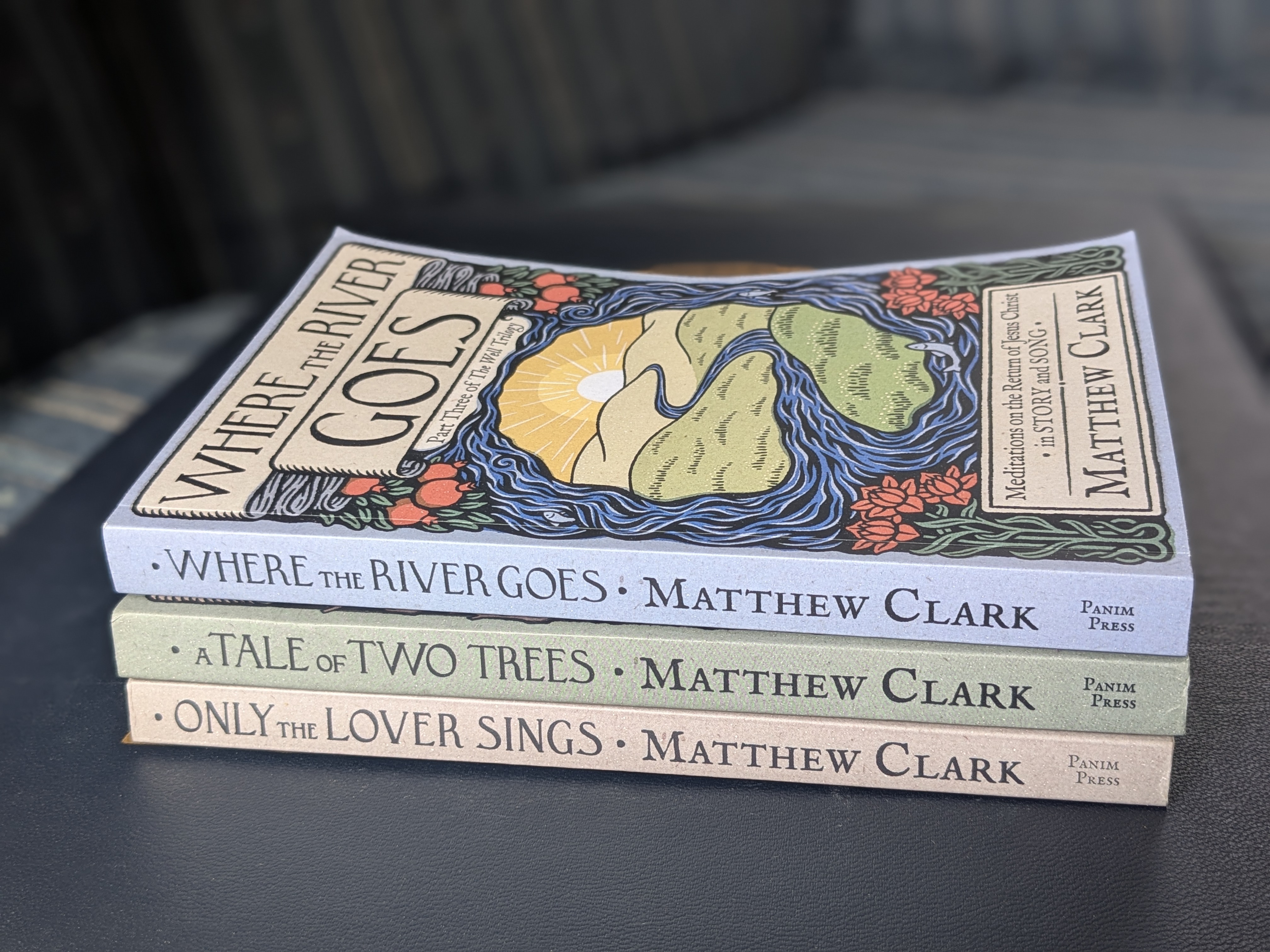
    I didn’t choose this theme; it is the heart of Where the River Goes, the third I’ve edited in a trilogy of books by Matthew Clark. And not long after I accepted Matthew’s invitation to be one of the book’s eleven guest essayists, I realized, “I need to write about the Dead Sea.” A place I’ve visited and studied until it’s almost a living character to me.

    After two years of hard news, including the full-stop of losing a sister I wasn’t done loving, vividly familiar geography turned into lament as I wrote. Why do the springs of Hermon feeding the Jordan River just run abruptly into a beautiful, sparkling, but rapidly evaporating dead end? Why so many cut-off potentials, so many metaphoric and actual deaths in the world?
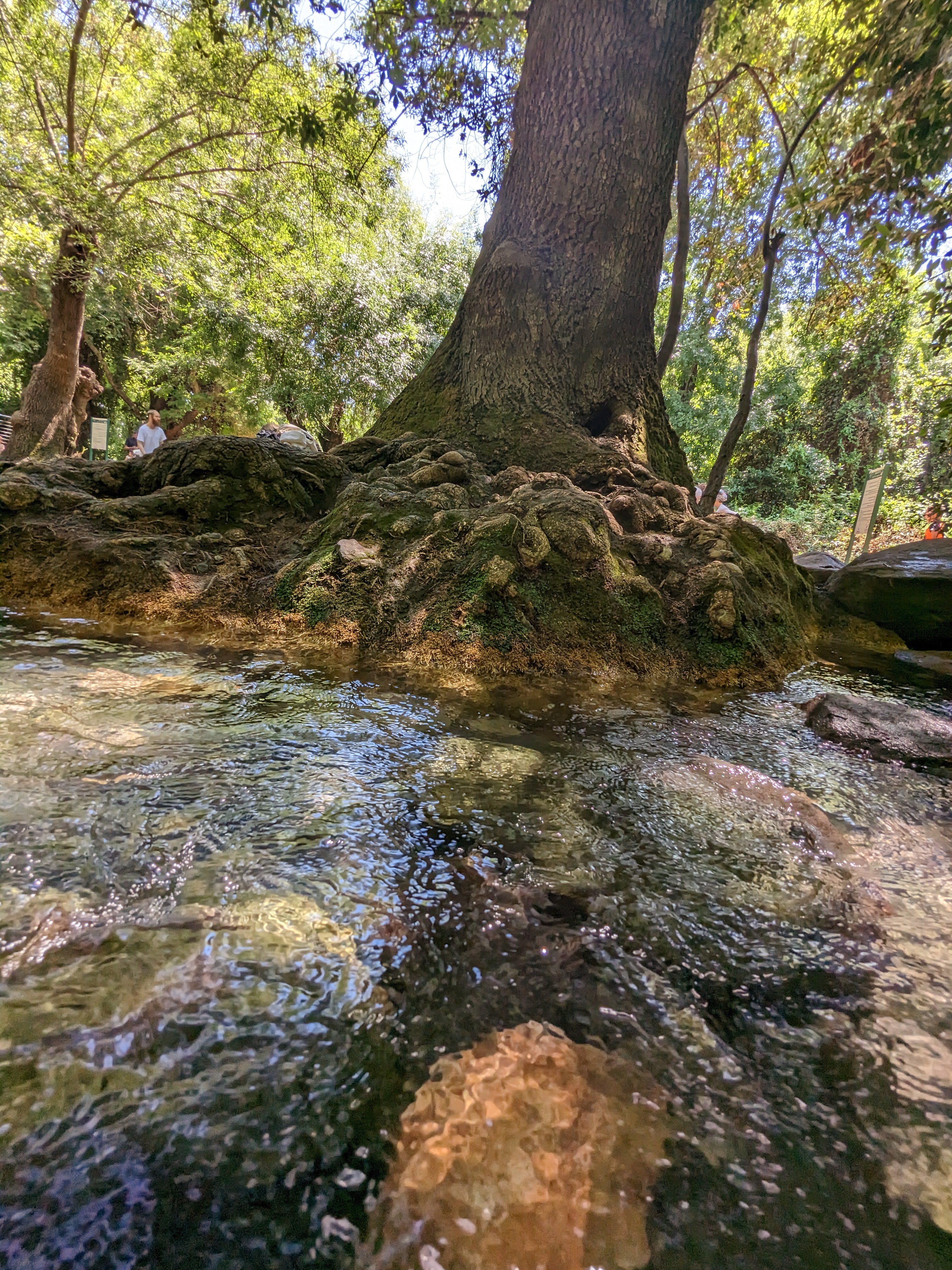
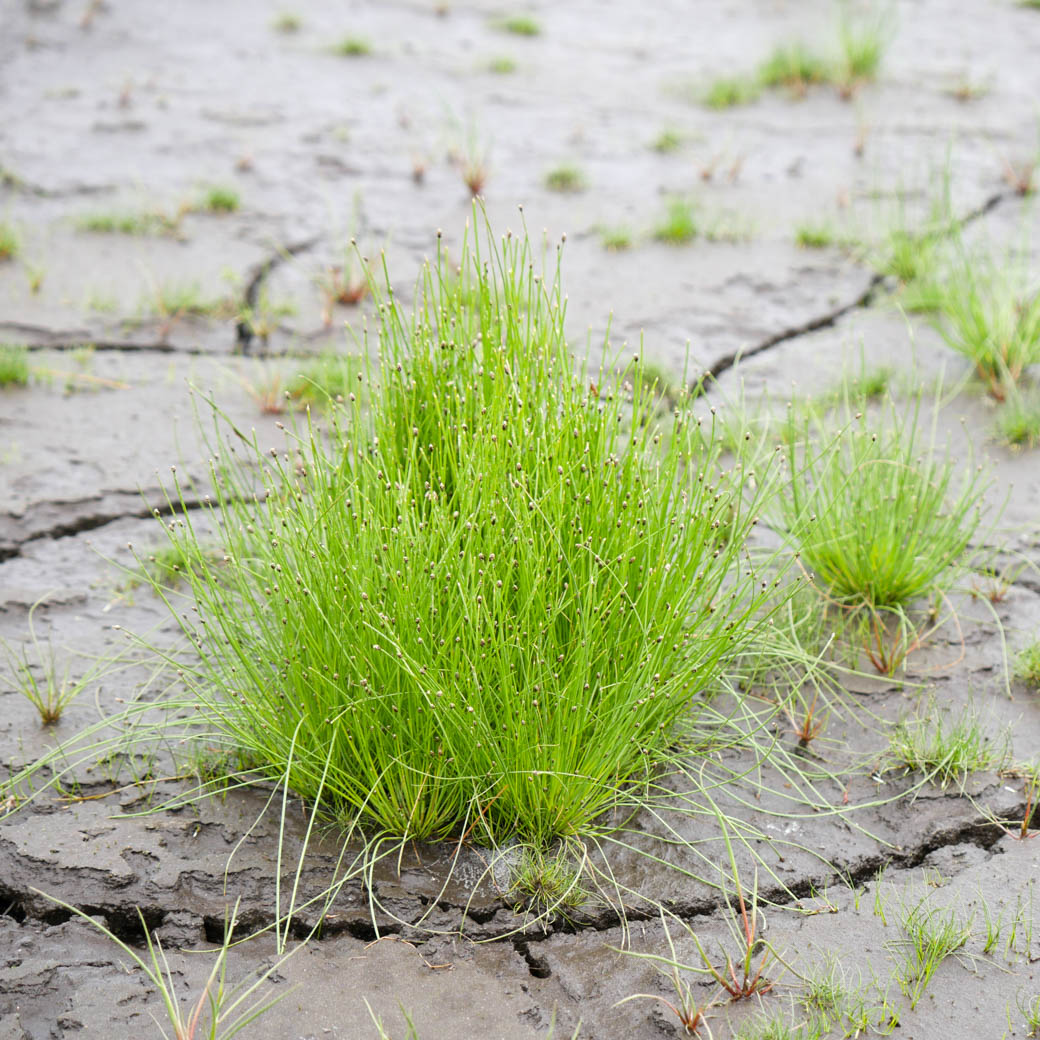
    It has meant a great deal to me to be immersed in this project at this time because as I edited and wrote and pitched a tent in this theme, I began to realize that death is not the only and especially not the greatest inevitability. Death is already passing away. We are already (and joyfully) haunted by Resurrection because (in the words of Ezekiel) “Everything will LIVE where the river goes.”

    Near the end of the editing process, I clicked open the latest version of the manuscript file, and tears sprang to my eyes when I saw that Matthew had added this dedication:

    “To those who grieve, and yet hope.”

    For those who’ve suffered losses (whether large or small), there’s a fellowship, a bond of suffering—and you are in it, with the rest of us. If you are sad and hopeful — or if you are sorrowful and cannot even imagine how to manage hope — we wrote for you.

    *

    Recently, I watched a pairs skating video with a little envy. What beauty there was in that level of skill and teamwork! When I returned to editing this project, I thought the Holy Spirit nudged me to look again.

    See the gorgeousness and artistry of 32 writers responding to three biblical metaphors and three albums of music? And who else (as editor) has gotten to meet that many writers and hold that many conversations — where? In the margins of their essays, in real time.

    I cried, I laughed in the middle of a very serious subject, I chuckled as one writer joked about Winnie the Pooh’s spelling style. I was in awe at the humility of very accomplished writers, very academic voices, and deeply bereaved folks to take direction from me.

    To one, I wrote, “I feel like you are speaking like someone who doesn’t want a friend to worry about him.” Graciously, he dug deeper and gave more.

    When (surprise!) Matthew invited me to add my own chapter, in one sense, the generosity of my fellow writers was a tough act to follow, but in another way, their example made it very easy to put my heart on the page. In another lavish act, two friends stepped in as my editors. And that’s how I learned that two years into the project, my prose had clearly been shaped by its many more lyrical writers.

    Of my 31 teammates, I have met just one in real life. But recently, several of us gathered onscreen to celebrate The Well Trilogy’s completion. While I’m still smitten with in-the-margins conversations, I was so excited to see these new-old friend’s faces, and signing in felt a little like I was about to see, say, some Narnia characters. “Oh look, it’s Mr. and Mrs. Beaver! There’s Tumnus the Faun!”

    Y’all, someday we’ll be in heaven, and the beauty and intricacy of our conversations and shared connections will be unrivaled. But I’ve had more than a little taste of it while working on these books. And beyond what my words here can express, I am grateful.
    Elisabeth

    May 6, 2025
    Boundless
    No comments on Trilogy
  • strange?

    Yesterday, I checked in with a loved one I hadn’t talked to in a while. The conversation went: I’m ok; she’s ok. She loves me; I love her. Then she said, “I’m sorry about Israel.” And I teared up a bit. What I hadn’t mentioned, she knew.

    Do you clam up on what touches you most deeply? It’s common in my region, in my family, for me. I am silent these days, not from lack of care, but from an overflow of it.

    This summer, my friends in Israel had to cancel or majorly alter vacation plans, one disappointment in a long (now almost-year) of suffering. Last summer, their unselfconscious care for my fresh loss was beautiful. I never doubted I would visit them this summer to return the favor, yet I did not. It was, and is, a grief.

    A friend said, “I’m sure God has other people who will care for them.” I am certain He does. But aren’t there all times when we want to — and even confidently expect — that we get to be the ones? As an older sister, when I’m disappointed not to meet a sibling’s need, I sometimes tell myself: “I want to help with that. I don’t get to this time.” God is always the answer; only sometimes does He invite me in to what He’s doing.

    In addition to deep feeling, I’m also silenced by deep awareness that not everyone sees the Mideast as I do. You may have noticed that I speak, not to everyone, but to those who already care about Israel. I’m not prepared to host arguments, but invite one-on-one discussion for the truly curious. I speak, not as an apologist, but as an intercessor.

    To me, being an intercessor means I’m not infatuated with Israel; I love her knowingly. I lived there for years, and I’m aware she has sins, though largely (in my view) not what the world thinks are her sins. And that up-close knowledge produces, not disdain, but sadness and hope and prayer.

    I think God has tapped me (just one among many) to be a true friend of a particular nation. Strange that He picked a clam like me? Oh yes! But strategic in its strangeness. (1 Cor 1:27) Would you consider that strangeness a moment?

    Here’s what’s really unexpected: An x-ray of my heart would show that I get stuck in my selfish feelings of disappointment: something that does zero good for those I wish I could help. But I believe that x-ray would also show a love that takes in who a person (or nation) is today, and who God is making them to be. It’s not the way I came wired; He is transforming my heart.

    Maybe you’re not moved by Israel. Maybe you’re certain my facts and perspective are wrong. I’m not worried about that. But what if? Is there someone God has tapped to love YOU like that? Is there someone He’s tapping you to love?

    Elisabeth

    September 25, 2024
    Uncategorized
    No comments on strange?
  • Risen

    I know something more deeply today than I did ten months ago, back before I helped choose a grave for my sister in a forest of tall pines.

    Let me say it quietly:

    We don’t have the power over life and death.

    I’ve lost a beloved aunt to a very treatable cancer, while another loved one coded eight times, and miraculously survived. Pondering today on the pandemic, on September 11 and October 7, I can see that men and women of good will, valor, and great skill: doctors and first responders, intelligence and defense forces can be great gifts, but they cannot ultimately control the tide of death that, in the end, comes to all of us.

    This is not just a fact that my brain knows. It is an astonishing grief.

    Today at church I heard an excerpt from John 11, a story that hits a tender spot for me. Newly bereaved of her brother Lazarus, Martha meets Jesus, and exclaims, “Lord, if you had been here, my brother would not have died.”

    She continues, “But even now I know that whatever you ask from God, God will give you.” 

    “Your brother will rise again,” Jesus says. 

    Martha is a woman of faith. “I know that he will rise again in the resurrection on the last day,” she says. 

    But Jesus replies, “I am the resurrection and the life. Whoever believes in me, though he die, yet shall he live,  and everyone who lives and believes in me shall never die. Do you believe this?”

    Can you believe what you’ve long believed, now you’re standing beside a grave?

    Even more, can you believe that Resurrection is standing beside you, your Teacher and Friend?

    My mind goes to a single word: Kumi.

    It means “Arise!” It’s what Solomon said to his bride, Jesus to Jairus’ dead daughter, Peter to lifeless Tabitha. In these contexts, it’s utterly compelling, filled with love, irresistible. Once in Jerusalem, I saw this word on the gravestone of a woman named Ori. Quoting from Isaiah 60:1, it read, “Arise, shine, for your light is come.” Or (as I imagine the engraver intended in this context): “Arise, Ori, for your Light is come!” 

    The One who was obedient unto death, the One who shattered death and rose, the One who loves and knows us through and through: He has the power of life and death. When He comes and speaks our names, nothing (not even our graves) will keep us from answering that call.


    Elisabeth

    March 31, 2024
    Uncategorized
    1 comment on Risen
  • Epiphany

    It wasn’t an easy year. This spring, our family experienced sudden loss; in the summer, my health was stressful; in the autumn, Israel was hit, and that hit me hard. But after two months of sharing serious prayer requests online, I hesitated to continue in December. Everyone’s trying to be happy right now, I thought.

    During the pandemic, I richly enjoyed the live home concerts held by songwriter and worship leader Wendell Kimbrough. Many of his Scripture-based songs are joyful or peaceful, but at each concert, in an act of hospitality for the broken-hearted, he would say, “Now we’re entering a time of lament.”

    Sometimes sad people can wonder:

    “Where is the place in Christmas for me?” 

    Or “Where is the place at church for me?”

    So when I shared Advent thoughts with my church family, I began:

    I have to say that I am sad this morning.

    Whether the time is Christmas, or the space is church, it’s appropriate to mention our grief, because Jesus came to the sad people. 

    Recently, while doing some research about hymn-writing, I learned a wondrous new word: canticle. I knew it had something to do with singing; I didn’t know that a canticle is a song in the Bible that’s not a psalm. Throughout the centuries, in the tradition of morning and evening prayer, people would often sing or recite one of these canticles. They often originated from people who were in tough spots, like Moses or the three worthies (who were about to be thrown into the fiery furnace), Hezekiah, Hannah, and Habakkuk — and then you have the New Testament canticles by Zacharias and Simeon and Mary. 

    Just before Christmas, I came across a song that expressed how I felt in many ways. While it focuses on Bethlehem, I want to speak a moment about Nazareth. Today Nazareth is a very busy town. It’s built on a hillside, and it’s very difficult to drive through, with streets so narrow that you might even want to pull in your mirrors. I’m told that the main city planner of Nazareth was the donkey. Where donkeys wanted to go up the hill is where the streets go up the hill, and they’re about as wide as a donkey that’s very heavily loaded. Nazareth is not a very fancy place to be, but it is the site of one of the most special experiences I had in Israel.

    Yes, I was visiting the Land where the Bible took place, but I could not predict the moments when I would really comprehend where I was. Most often, my experience was: I’m in this place where something amazing happened, and I wonder why I can’t really connect with it. But one day, while I was in Nazareth, I visited the excavations below the Church of the Annunciation. As my professor was talking, I realized, My goodness, this is where the Word became flesh.

    We think about Bethlehem as if the Christmas story starts there. It doesn’t. It starts in Nazareth in a tiny little home. And there an angel came to Mary with the good news — the best news for sad hearts — and said, “Hey, God is here.”

    Elisabeth

    January 7, 2024
    Boundless
    2 comments on Epiphany
  • Utterly Devoted

    Everyone needs an older sister or brother. Maybe I’m a little biased, as the eldest of eight, but I certainly did miss having someone a little ahead of me, especially in my early twenties. But over and over again, I benefited from the wise counsel of a woman who was passionate, smart, outspoken – and unusually dedicated to the idea of obeying Jesus, in a life-course that took her into rainforests and behind the book table at churches, to cottages on the coasts of Massachusetts and Norway, and out on the radio waves.

    Elisabeth Elliot: have you heard of her? Whether your answer is yes or no, I imagine there’s more of her work to explore. You can learn a bit more at Club 31 Women: Utterly Devoted, or at Kindred Grace: The Human Side of My Hero.

    Elisabeth

    October 12, 2023
    Boundless
    No comments on Utterly Devoted
  • How Can I Love Other Christians When We Argue All the Time?

    How do you have fellowship with other Christians even if you don’t agree politically?

    In this increasingly polarized world, how has your heart become calloused to others?

    How does division in the American church appear to someone who has lived overseas?

    These are all good questions, all asked by my friends — and all questions I need answers to, just as much as you do.

    Having talked, prayed, walked, read, created 50 pages of notes, written, rewritten, angsted, asked for help, asked for prayer, rewritten, and re-rewritten, it’s been quite the journey to write this article. I’m certain God has used it to shape my weary heart.

    At one stage, I was so encouraged by listening to a brand-new song that you can find the title in my closing paragraph. To me, the song said, We’re all on a long road trip. It feels long. Very long! But we’re almost home to heaven.

    How can I love other Christians in this polarized world? I think it starts with fresh hope, and I pray you find some here.

    Elisabeth

    August 30, 2021
    Boundless
    1 comment on How Can I Love Other Christians When We Argue All the Time?
  • True Love Stories

    I love stories. I especially love true stories, because they give me hope in God’s kindness. If you’re reading closely, however, you may have noticed that it’s been 12 years since Boundless originally published my celebration of that fact. What has happened since? Well, ten years ago, I sat in the dark of a Jerusalem night and waited breathlessly for the first photos of a little boy born more than 7,000 miles away: my sister Rachel’s son.

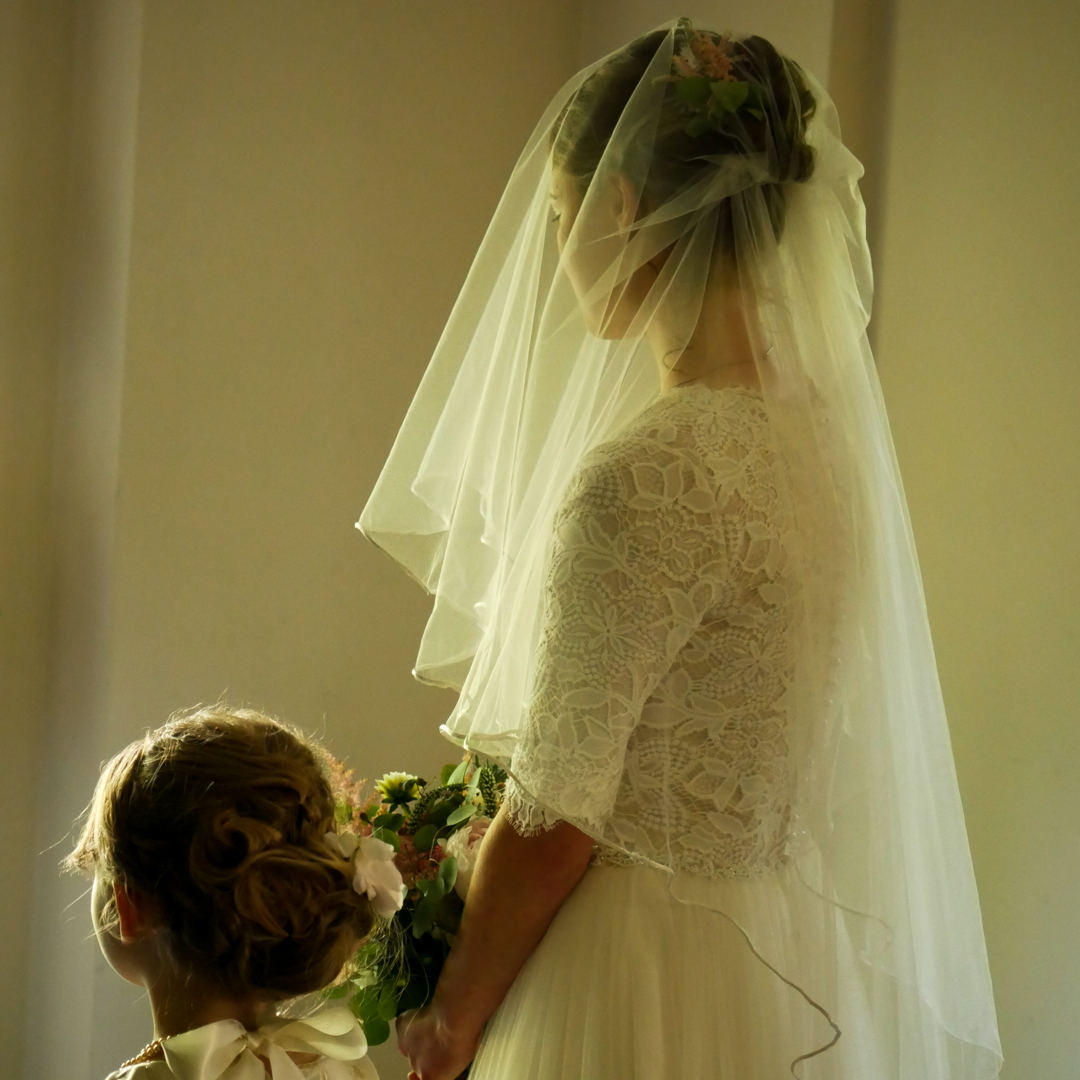
    Seven and six years ago, I celebrated two sister’s weddings in close succession. And this June, I put on a long, swishy bridesmaid’s skirt. While the wedding guests sat under the trees, and we waited to walk the grassy aisle, I was close enough to the bride to capture this scene.

    And when I reached the other end of the aisle, I found that I couldn’t have been placed more perfectly, just opposite my teary-eyed brother as he greeted my very dear friend, his bride. I had melted with joy when she welcomed his pursuit; I had welcomed them for hot chocolate after one of their very first dates; I had prayed and cried with them both. And now their joy was my joy.

    In July, I arrived at a darkened house at about 10 pm, prepared to babysit two munchkins while my sister and her husband went off to birth their baby. But the labor was so intense that I dashed to the bedside in the wee hours, just in time to see my brother-in-law catch his tiny, dark-haired daughter.

    Today I listened to the swishy sound of an unborn baby’s heartbeat: my brother’s baby — and I was captivated with the thought of a brand-new person whom I’ll have the privilege of knowing and loving.

    John the Baptist describes “the friend of the bridegroom” as uniquely positioned for joy, and having served as a bridesmaid now in two siblings’ weddings, I heartily agree. And actually, I see that over and over as a single women, I’m uniquely positioned in the best seat in the house. Yes, being so close to my siblings’ unfolding stories has increased my pain at times. But it has overwhelmingly increased my awe at the lovingkindness of God.

    In each of the true love stories described in today’s article at Boundless — yes, even the one that ended in sadness — I have seen a glimpse of His heart. If He so clearly enjoyed giving marriage and children to others who longed for it, then I have no doubt He would enjoy giving it to me. If He has not done so yet, it’s because of an even weightier longing He has on my behalf. I find this very mysterious, and not always a relief to my feelings, but I know it to be true. I express my trust in God by embracing the mystery as much as I can. And I express it by hanging onto hope that marriage and children will be mine someday as well.

    Meanwhile, though I fall into sadness at times, I also find that words are too weak to express how tall God has made me stand, and how my heart and life are filled with the love of friends and their children, my siblings, their children, and the young women whom I mother day by day. The fact that anxious younger singles can clearly see in me a woman beset by lovingkindness: that’s an immense joy and privilege.

    This is my love story for today.

    Elisabeth

    November 14, 2020
    Boundless
    2 comments on True Love Stories
  • What If I Never Have Children?

    Honestly? I didn’t want to write this article at first.

    On October 13th of last year, a friend shared “Menopause and a Hope Deferred” with me, and I discovered I had a lot to say about childlessness as a single. I submitted the idea to my editor, knowing it might meet a felt need for others, but still hoping she’d turn it down.

    She accepted it.

    And so I began to write “What if I Never Have Children?“

    My long-held desire for motherhood had never felt so raw: I was fresh out of grieving a relationship I hoped would lead to marriage, and keenly aware of my age.

    I didn’t feel ready to write about another sad topic.

    But in January, I created and shared a long, detailed survey, and over the next months, almost 30 people — some friends and some strangers — honored me by sharing their thoughts and experiences of childlessness.

    A number of friends gladly helped shape my thoughts. One called me out for tripping over past hurts in my discussion. Another friend asked me to be more honest and direct in a key paragraph. Still another friend described her husband and brother’s experiences with longing for children in a way that kept me from succumbing to the stereotypes about men.

    I read a number of books, articles, and blog posts. Some weren’t very helpful. Some were, like Lore Wilbert’s “Gift of Lack” and Betsy Herman’s When Infertility Books are Not Enough. Michael and Chelsea Sobolik’s story and heart refreshed me, too.

    In February, I visited my 91-year-old great aunt Helen — a new widow, yet the cheerfulest, most energetic old lady you may ever meet. While we were out on a walk (!), Aunt Helen commented that she hardly ever thinks about her age.

    Well! I thought. It’s certainly working for her. Maybe I should try it.

    Previously pretty unconcerned about the passage of time, I had over the past year or two fallen into the habit of despairingly repeating my age to myself. Let me just say that simply living my life (without much reference to age) is absolutely, no-question, hands-down superior.

    I kept writing.

    In March, a dear distant friend delivered her stillborn daughter, and we attended the funeral online.

    Just before Mother’s Day, one of “my girls” — a quartet of 19-year-olds whom I was training to cook — showered me with a wealth of verbal affirmation, quickly followed by the kindness of two more friends, leaving me standing tall on a day when I could have mourned.

    This summer, I was accidentally (in God’s purpose) present for my newest niece’s birth. (I’m still soaking up her sweetness like I’m a solar panel.)

    Meanwhile, my editor kept asking questions that sent me on deeper and more nuanced trails of thought. A male friend was vulnerable enough to share about his unexpected tears over childlessness. My own brother, who has faithfully invested in the children of his town, reached the end of his long wait: Yesterday, he and his wife announced their pregnancy.

    And somehow, through the process of simply living, coupled with pondering and writing for you, Jesus came quietly in and healed my despair. I have not given up longing for children, but my heart is more whole and more brave. And even though we mourn together, friend, this is what I pray for you: More whole. More brave. More joy and life.

    Yes, here and now. With or without children. Today.

    Elisabeth

    October 5, 2020
    Boundless
    3 comments on What If I Never Have Children?
  • loved!

    Singleness is painful for many, not only because of our disappointed hopes, but also because it so often raises questions about God’s character and about our own value:

    Am I invisible?  Unattractive? Uninteresting? Too picky? Too hard to communicate with? Am I too deeply flawed for love? Does God care about my love life? Is there anything He can do actually do? Has He simply forgotten me?

    Eleven years ago, Boundless published “One Single Day,” an article with a message I’m still telling today, because it’s still relevant to my experience, and it’s still true:

    Life hurts.

    But God (deeply, truly) loves me!

    That changes everything. 

    This is how He is guarding my heart from the confusion and cynicism and even despair I see nipping at the heels of those who, like me, haven’t moved into marriage — something we thought would have happened long ago. This deep, heart-level knowing is what I most deeply long for my blood siblings to experience — and what I pray for you right now:

    For this reason I bow my knees before the Father, from whom every family in heaven and on earth is named, that according to the riches of his glory he may grant you to be strengthened with power through his Spirit in your inner being, so that Christ may dwell in your hearts through faith—that you, being rooted and grounded in love, may have strength to comprehend with all the saints what is the breadth and length and height and depth, and to know the love of Christ…

    (from Ephesians 3:14-21)

    DSC08413

    Elisabeth

    August 3, 2020
    Boundless
    2 comments on loved!
  • A Passion Pilgrimage

    In the last few weeks, Annie Downs has been saying, “We’ve never done this before.” It’s a plea for patience with ourselves and with others, and I think it’s a really wise one.

    But perhaps, while the whole world is hobbiting at once, we could put our heads together and come up with some ways to cope. Here’s why I think we could: While we truly haven’t done this before — each of us, surely, has done some of it before.

    I’ve come to believe that God frequently prepares us for new challenges and adventures in a way we’d never recognize until after the fact.

    In fact, I suspect He had me practicing, months ago.

    For nine weeks last summer, I had the luxury of living in Jerusalem, writing and catching up with friends I hadn’t seen for years. It was also the first time I have lived alone. By “alone” I mean outside the close community provided by coworkers, friends, and family living just minutes away. I have these things at home; I had them when I lived longer-term in Israel. But that short summer introduced me to a new kind of loneliness, and I was not a fan.

    Now, because I was catching up with dear friends in Jerusalem, most days I did have tea or a meal with someone, somewhere, sometime, and that was rich and good. But to see someone, ever, meant I had to plan ahead, and I felt the lack of the casual, off-the-cuff interactions found at work or home. I discovered, too, that my moods and opinions tended to swing towards whichever person — in a string of people — I interacted with that day. I missed the continuity, naturalness, and rhythm of sharing space and time with the same folks nearly every day.

    What I learned last summer might not seem very profound: I hate loneliness. I need community. I prefer wider company than the inside of my own head. But I saw other things too: I can purposefully seek out community, even when circumstances are less than ideal, and survive. Because of the purpose behind it, that brief deprivation was well worth it. There was no lasting harm. And the very lack left me with a greater, more conscious love of things I had loved before.

    I think He had me practicing years ago.

    You see, I used to live overseas. To leave loved ones and fly to the other side of the world feels like a tiny death, every time. To live for months on end without hugging them, without the gift of presence: It felt like holding my breath underwater. I could do it for a while. I did! But as time dragged on and on, my lungs began to burn, and a little desperation began to rise and rise until the bursting point had almost arrived — and then God would do something. I traveled home; a loved one came to visit; I had a good video call; I connected deeply with a local friend; I got a grace-filled second wind…

    And the uncertainty! I learned to expect change, upheaval, and discombobulation. I haven’t figured out to skip my initial resistance to being knocked out of my groove (tell me how I can!), but I have learned how, at least, to be fruitful in seasons when my role and my future are equally undefined — and that’s thanks to God’s Spirit and the parable of the talents: In short, to  invest the opportunities that I have today.

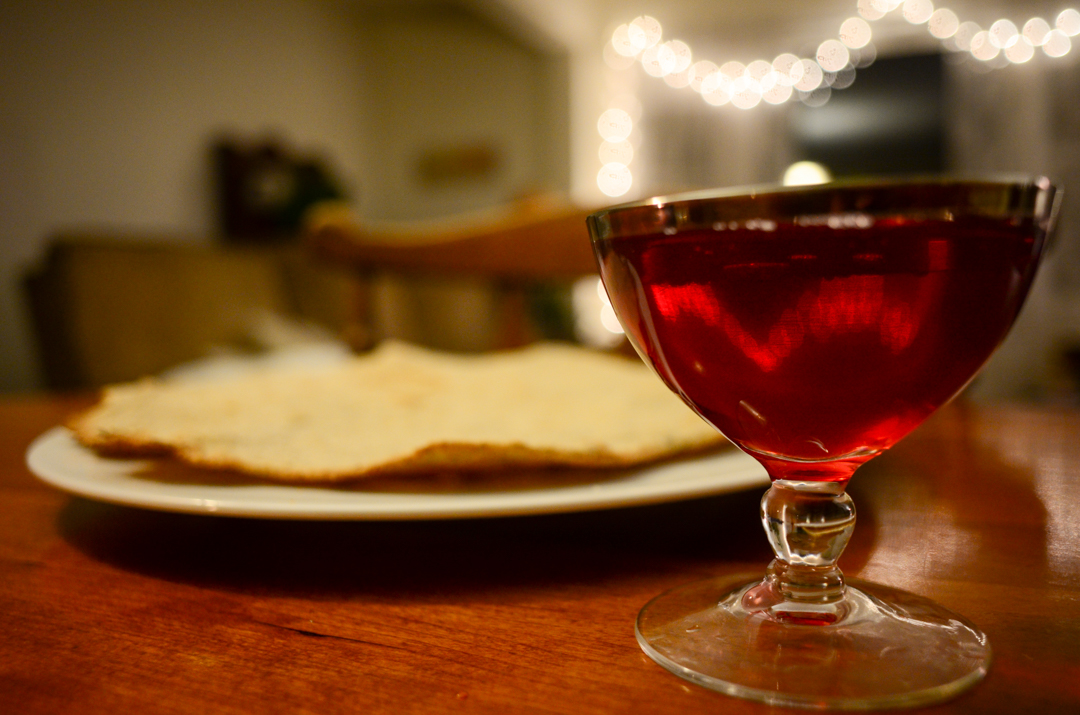
    Speaking of investing what I have: I had to approach holidays in a whole new way, to maximize what was unique about Christmas without my family for instance, rather than mourning what I didn’t have. To live abroad was to find myself wistfully out of sync with the calendar — and to return from abroad? It’s the same thing all over again. Christmas and Thanksgiving in Jerusalem didn’t crowd in on all sides: they had to be courted and coaxed to appear. And now that I’m in America, it’s Pesach and Sukkot I miss and create from scratch. But you know what? From scratch is a pretty joyful way to celebrate. In Israel, I learned through lack that it wasn’t Thanksgiving unless I made some stuffing. (So I made stuffing!) And at home — well, last night I crafted a tiny Seder, and tonight I snacked on homemade matza with horseradish and charoset, the bittersweet flavors reminding me that it’s Passover season.

    DSC_0017-2

    I guess, while we’re hobbiting, that everything has to be homemade. The holidays. Community. School, work, play. Have you been able to experience what a beautiful thing homemade can be?

    And the things that cannot be homemade? Hugging my niece and nephews. Sitting beside my dear friend as she grieves her stillborn child. Helping complete a little house for my brother’s soon-to-be bride. Sharing the actual beauty of my surroundings with city-bound friends. Glancing to the left and right at church to see the faces of friends and hearing our blended voices in the hymns. Walking through the now-closed Jaffa Gate in Jerusalem, a present fact that physically hurts my heart from thousands of miles away.

    What’s not evident in A Passion Pilgrimage, written when I could actually go to the places in Jesus’ story is this: a sprained ankle kept me from making the hike across the Kidron Valley. I sank to the floor at the back of the church at Gethsemane because I didn’t have full strength to stand. I sat at the top of the stairs and chatted with the priest near the prison of Jesus, because of this handicap.

    I was more than free, however, to make a mental journey that refreshed my spirit. And today, can’t our hearts go on pilgrimage, even though our feet cannot? 

    In fact, I’d venture to say that these lacks and deprivations may very well make our hearts grow fonder, indelibly imprinting them with a longing that will turn our steps towards all that God meant for us, just as soon as we are free to go.

    Blessed are those whose strength is in You,
    in whose heart are the highways to Zion. 

    (Psalm 84:5)

    Elisabeth

    April 9, 2020
    Boundless, Life in the Land, Writing Life
    No comments on A Passion Pilgrimage
1 2 3 … 16
Next Page

Get my posts in your inbox.

© 2023 Elisabeth Adams · All Rights Reserved

Create a website or blog at WordPress.com


Loading Comments...
 

    • Subscribe Subscribed
      • Elisabeth Adams
      • Join 84 other subscribers
      • Already have a WordPress.com account? Log in now.
      • Elisabeth Adams
      • Subscribe Subscribed
      • Sign up
      • Log in
      • Report this content
      • View site in Reader
      • Manage subscriptions
      • Collapse this bar