Just weeks ago, I was sitting in a vespers service in the US. Candlelight, carols, readings: the usual. And when the pastor gave his ordinary admonition to “go to Bethlehem,” I doubt he knew he had a listener who could take him literally.
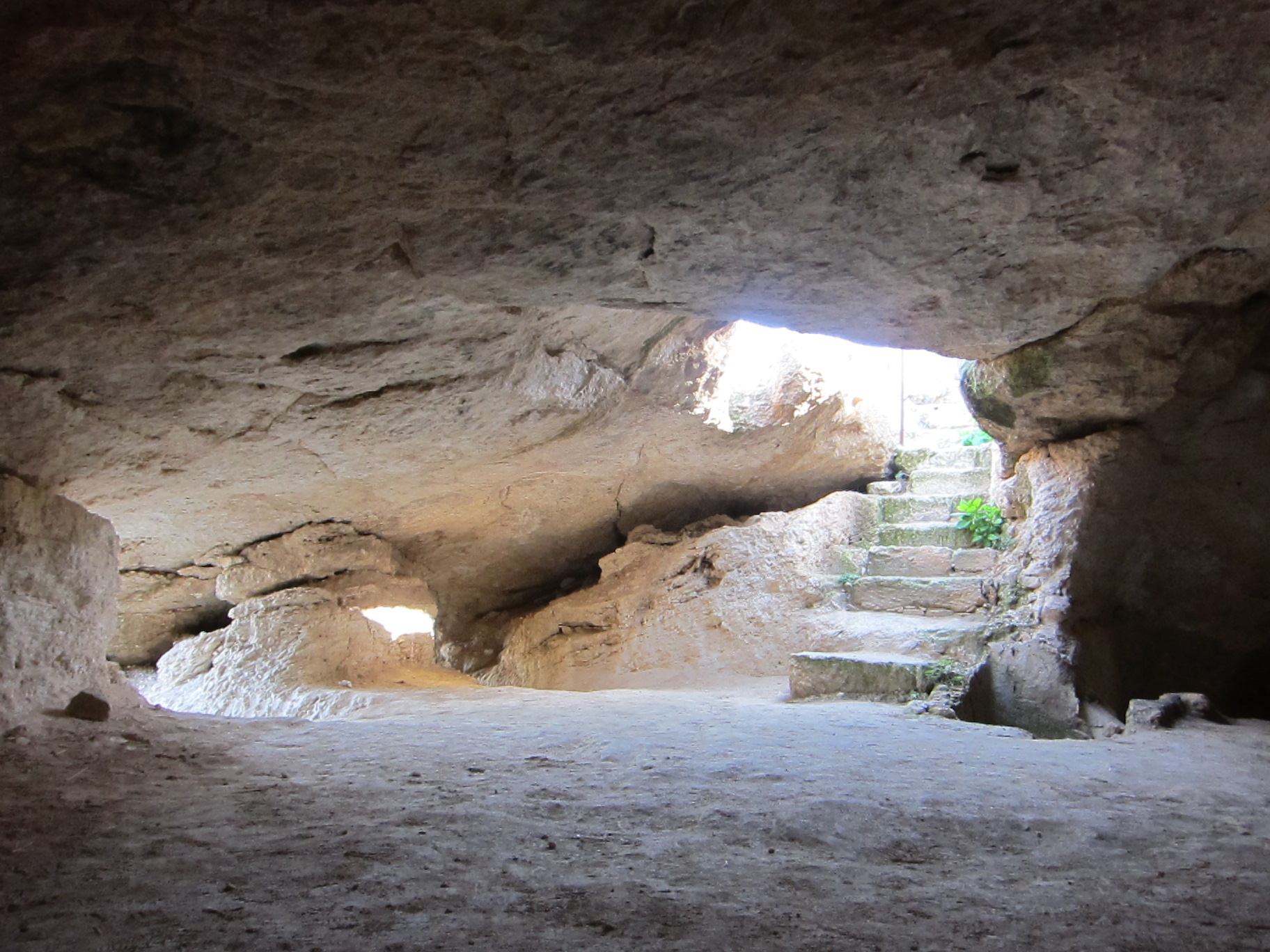
But I could! And I did. I went to shepherds’ fields, and saw what could have been a shepherd’s cave. It was stark and bare and still: an easy place to sing “O Little Town of Bethlehem.”
 I spent Christmas week in the company of a first-time guest to Israel, poking into all the Biblical corners of Jerusalem. Could you sing carols, eat felafel, pass beggars and snow-felled trees, wade through water in a tunnel delved in Old Testament times to meet the Pool of Siloam, explore the drains of the New Testament city, only to climb steps that led Jesus into the Temple, view scrolls that were already centuries old when he was on earth, visit the spots where he was born, healed the blind and lame, prayed his last prayer, died, rose, and to which he will return — all in the course of a week, and keep your head from spinning?
I even saw something new. Did you know that an Israeli archaeologist spent thirty years searching one hill for the tomb of Herod the Great – the villain of Jesus’ birth-story? He sought, he found, and someone reconstructed the opulence of that tomb (and more of Herod’s monumental building projects) for museum-goers like me. Did I gawk at reconstructions of the Temple because it was Herod’s handiwork? No, because of the carpenter who preached among its soaring white stone stone pillars. And as I stood in Herod’s mausoleum, was I impressed? No, I thought of the king who truly deserved such a costly memorial — and didn’t need it, because he rose from the dead.
If all this wasn’t enough to blow my mind, the last week of the year found me on another whirlwind tour. You see, I’ve inherited the tradition of reading the Bible through in a year — and I’ve embraced it as a way to stay at home in the mansion that is God’s word. Well, you know how that can go: I fell behind. In the past, I’ve embraced that too, because it’s satisfying to read the New Testament epistles as whole letters, and not in bite-sized pieces. And because God kindly blessed me with the ability to speed-read, it’s not hard to do.
This time, circumstances conspired to lump those letters in a whole new way. And I loved it! Imagine: you experience the entire gospel of John in one sitting. The next day, you read his three epistles. And you see how John is still dwelling on all the major themes Jesus shared with his disciples at the Last Supper. You read Jude, Peter, and James’s letters together: you notice how these four disciples dwell on the things they actually saw with their own eyes. “I remember the Transfiguration!” Peter says.
And then you jump to the book of Revelation: John, the beloved disciple who leaned on Jesus at the Last Supper, gets to see his Lord once again! But even the Transfiguration hasn’t prepared him for the glory and the majesty Jesus is wearing now.
By the time I’ve gotten to Revelation, it is the very last night of the year. The house is quiet and dark. I’ve got a candle burning, just because, and the music of Handel’s “Messiah,” which I’ve been listening to in honor of Christmas, comes alive in my head as I read the words he set to music:
“Worthy is the Lamb!”
I couldn’t have planned it myself, but I finish the Book at just five minutes before midnight and I listen to that song for real. Its majesty (and God’s timing) bring me to tears, because just as it reaches the intricate string of Amens that end the entire oratorio, a new year has begun.
Amen: Do you know what that word means?
Early this fall, when the political weather was cloudy with a chance of missiles, a friend handed me a Bible study he’d done on faith from a Hebrew-speaking perspective.
Now, Hebrew is lots of fun, because it often takes a three-letter root and plays with it, turning that root into a whole kaleidoscope of related words.
(For instance, the root amn: to support, make firm, foster turns into amana: treaty , omenet: nanny, h’emin: stand firm, ma’amin: believe, emun: confidence, and emunah: faith).
Emunah appears in a Bible story about Moses, where two friends hold up his arms so he can continue to pray throughout a key battle. Literally, his arms are faith. That is, they are supported and held up. In other words, when I have faith, it’s because Someone is holding me up: keeping me from crumbling or falling down or running away.
There’s another word in this family — and I’m pretty sure you know it already. It’s amen.
It means: Be firm! Be established!
You know how Jesus frequently starts an important statement with “Verily, verily,” or “Truly, truly”? Well, if you read the Hebrew translation, He begins: “Amen, amen, I’m saying to you…”
It’s as if He pauses, looks directly into His listeners’ eyes and says, “Listen, I’m about to tell you something completely trustworthy.”
Act on that — whatever it is he’s about to say, and your feet will be standing on a rock, not sand.
Listen, you don’t have to cross an ocean and a sea, visit Bethlehem’s shepherd-fields, tunnel underneath Jerusalem, study Hebrew, or read the Bible in huge gulps to know that Jesus is completely trustworthy.
It’s possible to stay at home and leap that one-foot leap of faith from your head to your heart. To live with intellectual and experienced knowledge of who he is.
Sit in him, as if he’s a well-loved, sturdy chair. Rest your full weight there.
Let him hold you up.
Be firm! Be established!
Amen.


 Elisabeth Adams