Jerusalem perches high on the mountainous rampart that runs half the length of Israel. Compared to the coast and the Jordan Valley and the whole southern end of the country, it is cool and temperate. It catches rain in winter, dew in summer — and some years, it even gets a little snow. But just about as soon as you leave its last neighborhood behind, you leave behind the green and Mediterranean climate and enter the Judean Wilderness.
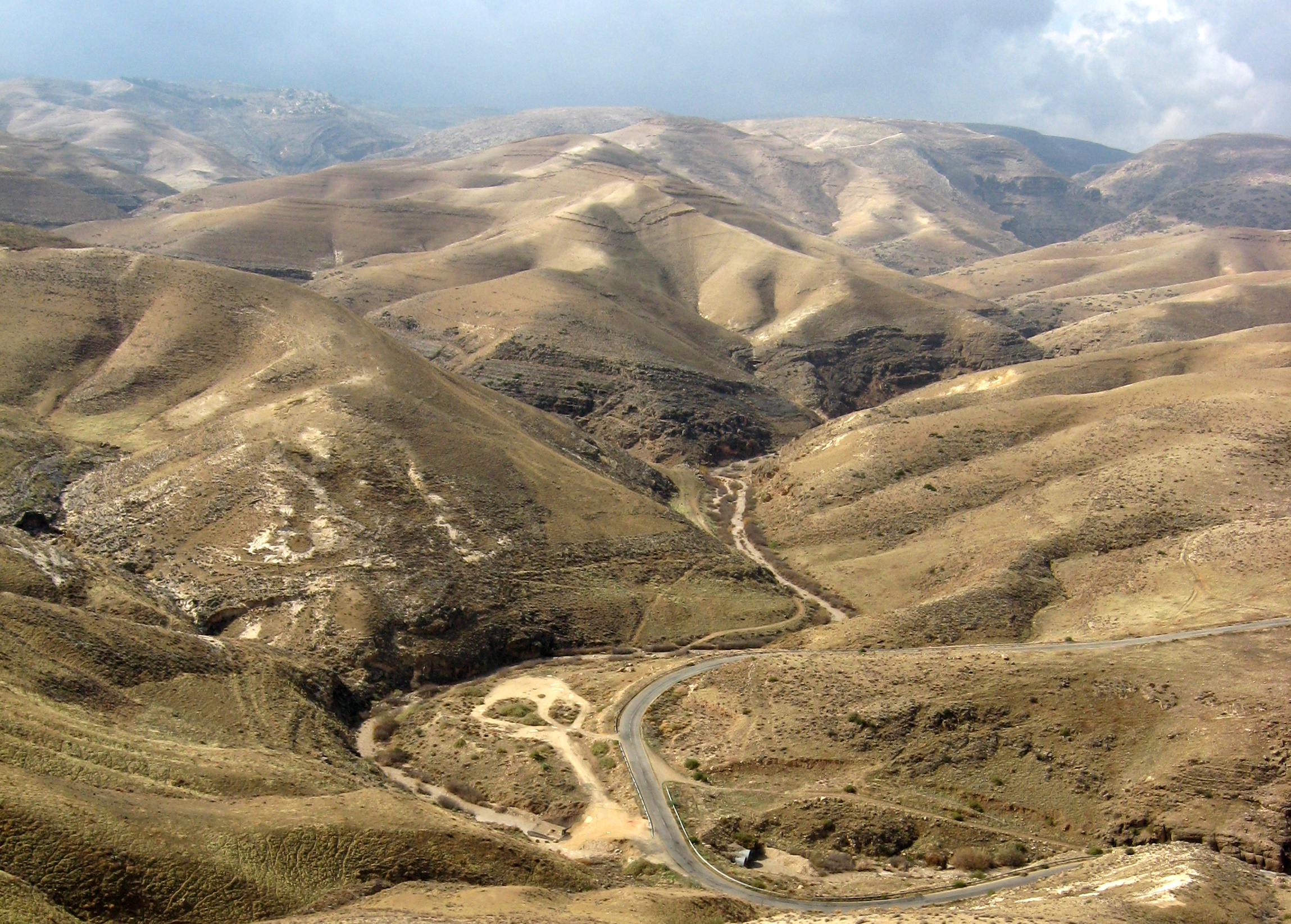
It’s not a desert; it’s a steppe zone. It’s not the land of camels, but of sheep and goats. It’s Psalm 23 country, where the shepherd leads his flock safely through narrow, death-shadowed valleys, alert for flash flood and ambush alike. Where nimble animals leave thin tracks winding round and round the rocky hills in their search for sustenance. There is food: small bushes dot the slopes. And in the spring, rain leaves the normally rugged hills misted in green and purple and red as short-lived grass and flowers come and go.
I love these hills. They’re rounded and undulating, like the backs of sleeping animals. I don’t mind the fact that they are stripped bare: no mantle of pine and terebinth trees, no terraces cascading with grapevines or olive orchards. They glow creamy gold in the setting sun, and though barren, they are sculpted — I have no doubt — with personal care by the master sculptor Himself.
As much as I love Jerusalem, I breathe a sigh of relief when I leave it behind. There is everything crowded and man-made, with layer upon layer of history and human opinion. Here the very bones of the land I love are laid bare: clear and simple, and hardly different from when David fled Saul and took refuge here. When John the Baptist grew into his calling. When Jesus came to be tested. When early monasteries created a rampart of prayer around Jerusalem, away from the luxury and the noise.
There is stillness in the wilderness. There is great beauty. And there we find our Shepherd.
I will bring her…into the wilderness, and there I will speak to her heart. (Hosea 2:14)
 Elisabeth Adams